TRQ FUEL INJECTOR 63QMCQ
fits model: Tempo. make: Ford. year: 1988–1994.
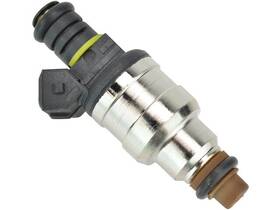
( Brand: Trq Fuel Injector ), ( Manufacturer Part Number: 63QMCQ ), ( Part Type: Fuel Injector ), ( Engine: 2.3l 4 Cyl Vin ), ( 2.3l 4 Cyl Vin: X ), ( 3.0l V6 Vin: U ), ( Compatible Make/model: Ford Tempo ), ( Compatible Years: 1988 1989 1990 1991 1992 1993 1994 88 89 90 91 92 93 94 ), ( Manufacturer Warranty: 12 Month Warranty ), ( Attention: Read Full Description To Confirm Fitment ), ( Cs-sku: 400 )
Review TRQ FUEL INJECTOR Ford fits TEMPO 1988–1994
The **Ford Tempo 1988-1994 63QMCQ Fuel Injector** is a precision-engineered component designed to deliver optimal fuel efficiency and performance for the 2.5L (150ci) inline-four engine found in this iconic compact car. This high-quality, direct-replacement injector is meticulously crafted to meet or exceed OEM specifications, ensuring seamless integration with the vehicle s electronic fuel injection (EFI) system. Engineered with a robust **6-hole nozzle design**, the 63QMCQ injector provides precise fuel atomization, promoting efficient combustion and reducing emissions while maintaining reliable power delivery. Constructed from durable materials, including a corrosion-resistant body and a high-flow internal passage, this injector is built to withstand the demands of modern fuel formulations, including ethanol blends, without compromising performance. The **electromagnetic solenoid** within the injector operates with exceptional responsiveness, allowing for accurate fuel metering under varying engine conditions, from idle to high-load scenarios. Whether replacing a worn-out original component or upgrading an older system for improved drivability, this injector ensures consistent fuel delivery, helping to eliminate issues like rough idling, hesitation, or poor acceleration. Ideal for both restoration projects and daily driving applications, the 63QMCQ fuel injector is a dependable choice for maintaining the integrity of your Ford Tempo s fuel injection system while supporting long-term engine health.
### **Pros and Cons of Buying a 1988-1994 Ford Tempo with a 63QMCQ Fuel Injector**
#### **Pros**
1. **Fuel Efficiency and Performance**
The 63QMCQ engine (a 2.5L inline-four) is known for its decent fuel economy compared to carbureted engines of the era, especially when properly maintained. It delivers around 18-22 MPG in the city and 25-28 MPG on the highway, which was competitive for its time. The fuel injection system provides smoother power delivery and better throttle response than carburetors, making it more reliable for daily driving.
2. **Reliability and Durability**
The 63QMCQ engine is a robust design, built to last if maintained correctly. Many examples from this era have exceeded 200,000 miles with minimal issues, particularly if the fuel injectors, ignition system, and cooling components are kept in good condition. The engine s simplicity compared to later turbocharged or more complex designs means fewer points of failure.
3. **Availability of Parts and Aftermarket Support**
Being a Ford product from the late '80s and early '90s, parts for the 63QMCQ engine are still widely available. Common components like spark plugs, wires, fuel injectors, and timing belts can be sourced from auto parts stores, salvage yards, or online marketplaces. The aftermarket also offers performance upgrades, such as cold air intakes, performance exhausts, and ECU tuning, which can enhance power and drivability.
4. **Lower Cost of Ownership**
Compared to modern vehicles, the cost of fuel, maintenance, and repairs is significantly lower. Labor costs are minimal, and many repairs can be done at home with basic tools. Insurance and registration fees are also affordable, making it a budget-friendly choice for those who prioritize practicality over luxury.
5. **Classic Appeal and Customization Potential**
The Ford Tempo is a cult classic, especially in its later model years (1990-1994), when it received a facelift and became more distinctive. Owners often enjoy restoring or modifying their Tempos, whether for street use, cruising, or even light off-roading with suspension upgrades. The fuel-injected models are particularly desirable among enthusiasts who appreciate the balance of simplicity and performance.
6. **Good for Beginners or Casual Drivers**
The 63QMCQ engine is forgiving for inexperienced drivers or those who don t want to deal with high-maintenance engines. It handles well on highways and in city traffic, and its straightforward design makes it easier to troubleshoot than more complex modern engines.
---
#### **Cons**
1. **Aging Fuel Injection System**
The fuel injectors in these Tempos are prone to clogging over time due to fuel quality issues from the late '80s and early '90s. Ethanol blends in modern fuel can also accelerate wear on seals and internal components. Regular cleaning or replacement of injectors (every 50,000 80,000 miles) is necessary to maintain performance. Neglecting this can lead to rough idling, poor acceleration, or even complete failure of one or more injectors.
2. **Electrical and Sensor Issues**
The fuel injection system relies on sensors (e.g., MAF, O2, TPS) that can fail over time, leading to check engine lights and drivability problems. The 63QMCQ engine is also known for its voltage regulator issues, which can cause electrical gremlins like flickering lights or starter problems. Replacing the voltage regulator and ensuring a clean electrical system is often recommended.
3. **Timing Chain Wear**
The 63QMCQ engine uses a timing chain (not a belt) that can stretch or jump over time, leading to valve train issues. While less catastrophic than a timing belt failure in an interference engine, a stretched chain can cause rough idle, misfires, or even catastrophic engine damage if it jumps. Inspecting the chain tensioner and guides during maintenance is wise.
4. **Coolant System Vulnerabilities**
The cooling system in these Tempos can develop leaks from the radiator, hoses, or water pump. The thermostat is also a common failure point, leading to overheating if not addressed. The 63QMCQ engine is sensitive to overheating, which can cause warped cylinder heads or seized pistons if ignored.
5. **Transmission Reliability (If Equipped with Automatic)**
Many 1988 1994 Tempos came with the C4 automatic transmission, which is known for its reliability but can develop slipping or rough shifting over time. Fluid changes every 30,000 50,000 miles are critical to prolong its life. Manual transmissions (C4 or Getrag) are generally more durable but require more attention to clutch wear.
6. **Rust and Structural Issues**
Ford Tempos from this era are notorious for rust, particularly in the frame rails, subframe, and floor pans. Even if the exterior looks fine, a thorough inspection of the undercarriage is essential. Rust can compromise structural integrity, leading to handling issues or even frame failure in severe cases.
7. **Limited Modern Technology**
Unlike modern vehicles, the 63QMCQ engine lacks features like onboard diagnostics (OBD-II), which makes troubleshooting more challenging. Many issues require a scan tool for the older OBD-I system, and some problems may only be diagnosed through manual inspection. Additionally, modern fuel additives or high-tech maintenance routines (like synthetic oil) weren t as common in the '80s and '90s, which can affect longevity if not addressed.
8. **Resale Value and Market Demand**
While the Tempo has a dedicated following, it is not a high-demand classic like a Mustang or F-150. Resale value is modest, and finding parts or enthusiasts to trade with can be hit-or-miss compared to more popular Ford models.
---
### **Conclusion**
The **1988 1994 Ford Tempo with a 63QMCQ fuel injector** is an excellent choice for someone seeking a **reliable, fuel-efficient, and enjoyable daily driver** with classic appeal. Its fuel injection system offers a significant upgrade over carbureted engines of the era, providing smoother operation and better performance. The engine s durability, combined with the availability of parts and aftermarket support, makes it a practical and cost-effective option for those who prioritize functionality over luxury.
However, **potential buyers must be prepared for maintenance challenges**, particularly with the **fuel injectors, electrical system, cooling components, and rust**. Regular upkeep such as injector cleaning, sensor checks, and rust prevention is essential to keep the vehicle running smoothly. For those willing to invest time and effort into maintenance, the Tempo can be a **loyal and rewarding** vehicle for daily use, cruising, or light customization projects.
---
### **Recommendation**
**Buy the Ford Tempo with a 63QMCQ fuel injector if:**- You want a **reliable, fuel-efficient, and affordable** daily driver with classic charm.
- You are **comfortable with basic mechanical maintenance** (or have access to someone who is).
- You plan to **keep the vehicle in good condition** with regular injector cleaning, fluid changes, and rust prevention.
- You enjoy **modifying or restoring classic cars** and appreciate the engine s simplicity and performance potential.
- You prefer **lower insurance costs, fuel economy, and a lower overall cost of ownership** compared to modern vehicles.
**Avoid or proceed with caution if:**- You **cannot commit to regular maintenance**, especially fuel injector care and electrical system checks.
- You **live in a harsh climate** (extreme cold or heat) where rust and coolant system failures are more likely.
- You **prioritize high resale value or modern technology** over classic appeal and practicality.
- You **do not enjoy working on cars** and cannot afford professional maintenance costs.
**Final Verdict:**For the right buyer the one who appreciates **simplicity, reliability, and character** the 1988 1994 Ford Tempo with a 63QMCQ fuel injector is a **fantastic choice**. It offers a **sweet spot between performance, cost, and enjoyment**, making it ideal for those who want a vehicle that s **fun to drive, easy to maintain (with proper care), and full of personality**. Just be prepared to **put in the work** to keep it running like new.
Details:
12 Month Warranty.
part #: 63qmcq price
- $54.42
specifications carfuelinjector:
- for models: Tempo
- for makes: Ford
- for years: 1988-1994
- brand: Trq Fuel Injector
- mpn: 63qmcq
- part type: Fuel Injector
- engine: 2.3l 4 Cyl Vin
- 2.3l 4 cyl vin: X
- 3.0l v6 vin: U
- compatible make/model: Ford Tempo
- compatible years: 1988 1989 1990 1991 1992 1993 1994 88 89 90 91 92 93 94
- manufacturer warranty: 12 Month Warranty
- attention: Read Full Description To Confirm Fitment
- cs-sku: 400
seller carFuelInjector:
- rating: 99.1%
- city: Boynton Beach, Florida
- # reviews: 23497
offer carFuelInjector:
- sold: 0
- availability: In Stock
- options: Ship-to-home
- started: March 28, 2026
- quantity: 1
general carFuelInjector:
- Air Fuel Delivery > Fuel Injection Parts > Fuel Injectors
- condition: New
returns carFuelInjector:
- time: 30 Days
- policy: Returns Accepted
- paid by: Seller
payments carFuelInjector:
- other
- wallet: Paypal
- credit card: Mastercard
shipping carFuelInjector:
- cost: $0.00
- type: Fixed
- class: Economy
- transit: 5-10 Days
- service: Economy
Trq Fuel Injector 63QMCQ Is Similar To:
- Trq Fia60316 Fuel Injector (44.7% similar) New condition...(June 9th, 2022)
- Trq Fia60319 Fuel Injector (44.7% similar) Fuel Injector FIA60319 by Trq. Designed as a direct-fit replacement of your worn-out or malfunctioning part, it will provide easy, no-hassle installation and help restore proper Fuel system functionality needed to keep your vehicle performing reliably, efficiently, and safely for many miles to come...(August 12th, 2022)
- Trq 34629yq For 2011-2015 Kia Optima Direct Injection High Pressure Fuel Pump 2012 (33.3% similar) For 2011 -2015 KIA optima used direct injection high pressure Fuel pump 34629YQ...(December 2nd, 2024)
- Trq Fia60849 For Nissan Frontier 1998-2004 Fuel Injector (32.1% similar) For Nissan frontier 1998 -2004 Trq Fuel Injector...(January 3rd, 2025)
- Trq Fia60790 Fuel Injector Set Compatible With 1999-2002 Toyota 4runner 1999-2004 Taco (42.6% similar) Items may have some minor signs of use, and the original protective wrapping be absent or item repackaged. Open box condition notice:: items are in perfect working condition. UPC: product features: style: FIA60790. Trq Fuel Injector set compatible with 1999 -2002 Toyota 4RUNNER 1999 -2004 Tacoma ...(January 29th, 2025)
- Trq 83367dqkj For 2016 Audi A3 Sportback E-tron Fuel Injector (30.6% similar) Parts geek - for 2016 Audi a3 sport back e-tron Fuel Injector 83367DQKJ 83367DQKJ: review fitment notes to ensure proper fit condition: new brand: Trq notes: genuine series 12 month warranty vehicle: engine: E-TRON1.4L 4 cyl turbocharged...(February 21st, 2025)
- Trq 32633hssw For 2005-2006 Isuzu Ascender Fuel Injector Harness Connector (35.5% similar) Parts geek - for 2005 -2006 Isuzu ascended Fuel Injector harness connector 32633HSSW 32633HSSW: review fitment notes to ensure proper fit condition: new brand: Trq notes: 12 month warranty vehicle: engine: ASCENDER5.3L V8, ASCENDER4.2L 6 cyl...(February 21st, 2025)
- Trq Fia60612 Fuel Injector (44.7% similar) Designed to deliver Fuel efficiently and reliably, this Injector is compatible with a range of car model's makes. This high-quality Fuel Injector from Trq is the perfect replacement for your cars old. For Honda ridge line 3.5...(March 16th, 2025)
- Trq Fia60862 Fuel Injector Fits 2008-2009 Buick 2006-2009 Chevrolet 2005-2008 Pontiac (40% similar) Trq Fuel Injector fits 2008 -2009 Buick 2006 -2009 Chevrolet 2005 - 2008 Pontiac. Fits: grand pix Pontiac v8 5.3L Fuel Injector. Lacrosse Buick v8 5.3L Fuel Injector. Impala Chevrolet v8 5.3L Fuel Injector. This item is backed by our limited lifetime warranty...(April 11th, 2025)
- Trq Fia73372 Fuel Injector Fits Acura Honda Saturn (54% similar) O-ring quantity: pilot Honda Fuel Injector. Mounting hardware included: no. Ridge line Honda Fuel Injector. Maximum outside diameter: .76 in. Fuel Injector style: Khan. Terminal gender: male. Connector gender: male. Trq Fuel Injector fits aura Honda Saturn. Gasket or seal included: no. Odyssey Honda...(April 15th, 2025)
- Trq 98137wcgc For 2000-2003 Dodge Ram 2500 Van Fuel Injector 2001 2002 (31.7% similar) Part #: Trq 98137WCGC for sale...(April 15th, 2025)