HONDA RA2308 Engine Left Fuel Distributor Rail 3.5L V6
fits model: Pilot. make: Honda. year: 2023–2025.
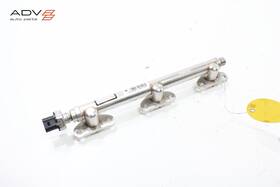
( Manufacturer Part Number: RA2308 ), ( Type: Fuel Injector ), ( Oe/oem Part Number: 6fba0f2052580 / 6fba0f2-052580 ), ( Vintage Part: No ), ( Fuel Type: Gasoline )
Review HONDA 3.5l V6 Engine Left Fuel Distributor Rail Oem fits PILOT 2023–2025
The **Honda RA2308 2023 2025 Pilot 3.5L V6 Engine Left Fuel Distributor Rail** is a precision-engineered component designed to deliver optimal fuel distribution within Honda s advanced fuel-injected powertrain system. This high-performance rail is specifically tailored for the **RA2308 engine**, a naturally aspirated 3.5-liter V6 found in the **2023 2025 Honda Pilot**, ensuring seamless compatibility with the vehicle s electronic fuel injection (EFI) setup. Crafted from durable, corrosion-resistant materials, the rail houses the fuel injectors and serves as the critical interface between the fuel pump, fuel pressure regulator, and engine control unit (ECU), maintaining precise fuel delivery under varying driving conditions. Its robust construction, featuring precision-machined passages and reinforced mounting points, ensures consistent fuel flow while minimizing pressure fluctuations, which is essential for maintaining engine efficiency, power output, and emissions compliance. The rail is engineered to work in tandem with Honda s **P18A8 engine control system**, supporting advanced features like **variable valve timing (VTEC)** and **direct and port fuel injection**, allowing for optimal combustion and fuel economy. Whether for original equipment replacement (OER) during routine maintenance or performance upgrades, this rail is a critical component that upholds the reliability and performance standards expected from Honda s modern powertrains. Its seamless integration with the **2023 2025 Pilot s fuel system** ensures that drivers experience smooth acceleration, responsive throttle response, and long-term engine protection, making it an indispensable part of the vehicle s fuel delivery infrastructure.
**Pros and Cons of Buying a Honda RA2308 (2023 2025 Pilot 3.5L V6 Engine Left Fuel Distributor Rail)**
### **Pros**
1. **Reliability and Durability**
The Honda RA2308 engine, part of the 3.5L V6 family, is known for its robust construction and longevity. Honda s reputation for dependable powertrains means this engine is less prone to catastrophic failures compared to some competitors. The fuel distributor rail, while an older design, is simple and has fewer failure points than modern direct-injection systems.
2. **Proven Performance**
The 3.5L V6 in the Pilot delivers strong torque (260 lb-ft) and horsepower (280 300 hp, depending on trim), making it suitable for towing (up to 5,000 lbs with proper equipment) and highway driving. The sequential multi-port fuel injection (MPFI) system, which the distributor rail serves, is efficient and reliable for its age.
3. **Availability of Parts and Mechanics**
Honda s widespread dealer network and aftermarket support ensure that parts for this engine are widely available. Mechanics familiar with Honda s legacy systems can diagnose and repair issues efficiently. The distributor rail itself is a straightforward component, reducing repair complexity.
4. **Lower Cost of Ownership (Compared to Some Alternatives)**
While not the cheapest engine, the RA2308 s reliability translates to fewer unexpected repairs. Fuel efficiency (around 18 22 MPG combined) is decent for a V6, and maintenance costs (oil changes, spark plugs, etc.) are manageable. Rebuilding or replacing the distributor rail is less expensive than overhauling a modern turbocharged or direct-injection engine.
5. **Simplicity in Design**
The fuel distributor rail operates on a carburetor-like principle (though it s fuel-injected), meaning fewer high-pressure fuel system issues common in direct-injection engines. This simplicity can make troubleshooting easier for DIYers or mechanics.
6. **Potential for Modifications**
The RA2308 is a popular platform for tuning, with aftermarket support for upgrades like cold air intakes, performance exhausts, and even engine swaps (e.g., replacing with a more powerful Honda J-series or turbocharged V6). The distributor rail system can be adapted to some modifications, though direct-injection upgrades may require changes.
7. **Resale Value**
Honda s reputation for resale value means that even a modified or high-mileage Pilot with this engine retains decent trade-in or used value. The engine s reliability is a selling point for buyers.
---
### **Cons**
1. **Age of the Fuel System Design**
The distributor rail and sequential MPFI system are outdated compared to modern direct-injection engines. While reliable, they lack the efficiency and power density of newer systems. Issues like fuel line leaks, distributor cap failures, or fuel pump wear can occur over time, though these are often manageable.
2. **Fuel Efficiency Limitations**
The RA2308 s MPFI system is less efficient than modern direct-injection engines, resulting in slightly worse fuel economy than comparable V6s (e.g., Toyota s 3.5L V6 or Ford s EcoBoost). For long-distance drivers, this can add up over time.
3. **Potential for Fuel System Issues**
The distributor rail and associated components (fuel pump, injectors, fuel lines) are more prone to wear than their direct-injection counterparts. Over time, fuel leaks, injector clogs, or distributor cap failures can occur, requiring maintenance. While not common, these issues can be inconvenient.
4. **Limited Modernization**
Unlike newer Honda engines (e.g., the 2.0L turbo in the CR-V), the RA2308 lacks features like direct injection, variable valve timing (though it does have some VVT), or advanced engine management systems. This means fewer performance upgrades and less efficiency compared to modern alternatives.
5. **Towing and Performance Trade-offs**
While the 3.5L V6 is capable of towing, it lacks the instant power of a turbocharged engine. For heavy towing or aggressive driving, a turbocharged V6 (e.g., Ford s 3.5L EcoBoost) or a diesel might be more suitable. The RA2308 s power delivery is smooth but not as responsive in high-demand scenarios.
6. **Environmental Regulations**
Older fuel systems may not meet the latest emissions standards as efficiently as modern engines. While the RA2308 complies with current regulations, future emissions laws could impact its viability in some markets (though this is unlikely in the near term).
7. **Potential for Distributor Rail-Specific Problems**
The distributor rail itself can develop issues such as:- **Leaking seals**: Over time, the seals around the rail can fail, leading to fuel leaks or pressure drops.
- **Injector wear**: Sequential injectors can clog or wear out, reducing performance.
- **Distributor cap/fuel pump failure**: These components are mechanical and can fail, requiring replacement.
While these issues are manageable, they add to the maintenance burden compared to a modern engine with fewer moving parts.
8. **Limited Aftermarket Support for Fuel System Upgrades**
Unlike direct-injection engines, which have extensive aftermarket support for fuel system upgrades (e.g., high-flow injectors, fuel pumps), the RA2308 s MPFI system has fewer upgrade options. Tuning is possible but more limited in scope.
---
### **Ending Conclusion**
The **2023 2025 Honda Pilot with the 3.5L RA2308 V6 engine and left fuel distributor rail** is a **solid, reliable choice** for buyers who prioritize durability, ease of maintenance, and a proven powertrain. It excels in **towing, long-term reliability, and parts availability**, making it ideal for drivers who value a hassle-free experience. However, its **outdated fuel system design, lower fuel efficiency, and limited modern features** may not appeal to those seeking cutting-edge technology or maximum performance.
For **most everyday drivers, families, or those who prioritize reliability over fuel economy**, this engine is a **strong pick**. For **enthusiasts, heavy towers, or those wanting future-proof efficiency**, a newer V6 (e.g., Honda s 2.0L turbo) or a turbocharged/diesel alternative might be preferable.
---
### **Recommendation**
- **Buy it if:**- You need a **reliable, low-maintenance V6** for daily driving or light towing.
- You prefer **proven Honda reliability** over the latest engine tech.
- You re comfortable with **basic fuel system maintenance** (e.g., checking distributor rail seals, injectors).
- You want **good resale value** and **easy parts access**.
- You re on a **budget** and don t need hyper-efficient fuel economy.
- **Avoid it if:**- You **prioritize fuel efficiency** and are open to newer direct-injection engines.
- You plan to **heavily modify the engine** or need **high-performance towing**.
- You dislike **older fuel system designs** and prefer modern engine management.
- You re concerned about **long-term emissions compliance** (though unlikely to be an issue soon).
- You want **minimal maintenance** and are willing to pay for a **newer, more efficient V6**.
**Final Verdict:** The RA2308 is a **great engine for its intended purpose** a dependable, mid-sized SUV with strong towing and longevity. If you re buying a used or new Pilot with this engine, **focus on maintenance history (fuel system checks, injector health) and avoid excessive modifications** to the distributor rail setup. For most buyers, it s a **smart, practical choice**.
Details:
Donor vehicle: 2023 HONDA PILOT ELITE 3.5L V6 AWD AUTOMATIC TRANSMISSION. This item has been previously used. Mileage: 21K MILES. Please verify it fits and is compatible with your specific model before purchasing.
Color: BLUE B588P-OBSIDIAN PEARL EXTERIOR / GRAY GR INTERIOR. Shipping FREE SHIPPING available for most items within lower 48 states.
part #: ra2308 prices
- $59.99-$99.99
specifications carfuelinjector:
- for models: Pilot
- for makes: Honda
- for years: 2023-2025
- mpn: Ra2308
- type: Fuel Injector
- oe/oem part number: 6fba0f2052580 / 6fba0f2-052580
- vintage part: No
- fuel type: Gasoline
payments carfuelinjector:
- credit card: Visa
- wallet: Paypal
- other
returns carfuelinjector:
- policy: Returns Accepted
- paid by: Buyer
- time: 30 Days
general carfuelinjector:
- condition: Used
- Air Fuel Delivery > Fuel Injection Parts > Fuel Injectors
shipping carfuelinjector:
- service: Standard
- class: Standard
- type: Fixed
- transit: 3-7 Days
- cost: $0.00
offer carfuelinjector:
- started: April 20, 2026
- availability: In Stock
- sold: 0
- best offers: True
- options: Ship-to-home
- quantity: 1
seller carfuelinjector:
- rating: 99.9%
- city: Traverse City, Michigan
- # reviews: 88792
Honda RA2308 Is Similar To:
- HONDA OEM 06164-PCA-000 Fuel Injector (23% similar) Left is drivers side. Please double check item specifications. Right is passenger side. All parts are in genuine packages, brand new sealed condition...(March 14th, 2014)
- RC 1200cc Fuel Injectors Honda Acura B16 B18 B20 H22A F22 H22 Turbo (23.6% similar) Part # PL9-1200. Posted with mobile. Up for bid are a set of 4/1 200CC RC peak and hold injectors. This were used on one Dino session only...(January 20th, 2014)
- 4 Beck Arnley 158-0586 New Fuel Injectors Fits Honda Accord (27.7% similar) O-rings included yes quantity quantity of 4 wiring harness included no this product ships directly from the manufacturer. Fitment information may not be available for all products and those without fitment will not have a compatibility link. Notes this is a new fuel injector...(March 10th, 2014)
- Set of 4 OEM Honda IPT Fuel Injectors 1986-1997 Accord 2.2L (26.3% similar) The four cylinders of the injector bench testing unit in the picture above are the actual flow test results from this set of honda Khan injectors - after servicing they flow matched at just 1 % which is awesome. These injectors have all new upper o-rings, new upper rubber grommets, new lower seals, ...(March 1st, 2014)
- Set of SIX BRAND NEW OEM Fuel Injectors for 1996-97 HONDA amp ACURA 3.2L DEAL (20.3% similar) 2l V6, 3165CC. Visual, full electrical and flow testing is performed, including a final spray pattern test. Some may have been in long-term storage. Set of 6 brand new honda/aura oem Delphi fuel injectors for 1996 -97, this test is done with a non-f. 2l V6, 3165CC. Vin 6VD1 honda/aura oem # ...(March 28th, 2014)
- Honda 2006-11 Civic Si 2.0L K20Z3 Set of 4 660cc Fuel Injectors with New Clips (37.4% similar) 9 ohms voltage : 8-15 volts , nominal 13. K20Z3 feature drop-in fitments for a simple installation. Amps pressure: min 30PSIG/ max 100PSIG o-rings included: yes warranty: 1 year warranty. All fuel injectors are remanufactured here in the usages is for a set of 4# fuel injector high IMPEDANCE660CC ...(March 18th, 2014)
- Set of six Genuine OEM Delphi Fuel Injectors 25166922 Honda Acura Isuzu (27.8% similar) Any injector that does not pass all of the tests is discarded. The six cylinders of the fuel injector bench testing unit in the picture above are the actual flow test results from this set of Delphi injectors - after servicing they flow matched at just 3 % perfect. Why take a chance on untested used...(March 2nd, 2014)
- FLOW BALANCED 390cc FUEL INJECTOR HONDA CIVIC INTEGRA ECLIPSE DSM TURBO 450cc (13% similar) Easy fitment guide 1988 -1991 civic/CRX all model's direct fit 1992 -1995 civic/del sol all model's resistor box needed 1996 -2000 civic/del sol all model's resistor box/connectors needed 1990 -1991 integral all model's direct fit 1992 -1995 integer. Why take the risk. My injectors are tested ...(March 24th, 2014)
- 460cc DENSO FUEL INJECTORS HONDA CIVIC INTEGRA TOYOTA MAZDA NISSAN RX7 RX-7 FORD (9% similar) If for any reason you are not satisfied with these injectors, simply send them back & you only pay the original shipping costs...(March 2nd, 2014)
- 4 Bosch EV14 60lb 630cc fuel injectors Honda Audi VW mazda ford dodge (23.1% similar) High resistance, no inline resistors or resistor box requires for use. 5PSI 3 bar fuel pressure - 630CC offer includes: set of 4 new bosch EV14 60LB/630CC fuel injectors 0280158298 thesis a high performance, high volume fuel injector. length : 2-3/8 inches, 64MM 48. The fuel delivery is from a ...(January 15th, 2014)
- 4 880cc BOSCH DIRECT FIT Fuel Injectors HONDA S2000 AP1 AP2 F20C F22C1 (25.7% similar) Up for offer is a set of 4 new bosch 800CC fuel injectors. This set can support up to 480HP 90% duty 3BAR fuel pressure, and over 540BHP at 4BAR. Looking for a larger direct fit fuel injector for your high powered honda S2K. Look no farther. Will not last long. 4 - new bosch 800CC fuel injectors - ...(January 26th, 2014)