MAXLEVE-AUTOPART B15050201EU Fuel Injectors 3.5L 3.0L
fits model: Pilot, Accord. make: Honda. year: 2003–2007.
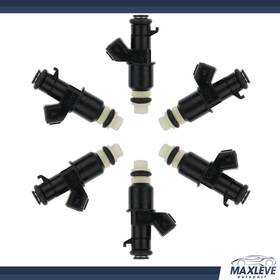
( Brand: Maxleve-autopart ), ( Manufacturer Part Number: B15050201EU ), ( Manufacturer Warranty: 1 Year ), ( Interhange Part Number: 842-12289 ), ( Item Weight: 1 Lb ), ( Oe/oem Part Number: 16450-rca01, Fj485 ), ( Product Type: Fuel Injector ), ( Fitment Type: Direct Replacement ), ( Bundle Listing: No ), ( Placement On Vehicle: Front ), ( Number Of Hole: 8 Hole ), ( Injector Design: Metal Composite Plastic ), ( Connector Color: As Shown In The Picture ), ( Package: 6pcs ), ( O-rings Included: Yes, Preinstalled ), ( Fuel Delivery Type: Fog-type Spray ), ( Oe Spec Or Performance/custom: Oe Spec ), ( Fuel Type: Gasoline ), ( Performance Part: Yes ), ( Connector Type: Male )
Review MAXLEVE AUTOPART Fuel Injectors 2010 Honda 3.5l 3.0l fits PILOT ACCORD 2003–2007
Maxleve Autopart B15050201EU Fuel Injectors - Precision Components for Enhanced Performance in Honda Models
The Maxleve Autopart B15050201EU Fuel Injectors are premium replacement parts designed specifically for the 2005-2010 Honda Pilot 3.5L and 2003-2007 Honda Accord 3.0L engines. These fuel injectors are meticulously engineered to deliver exceptional performance, reliability, and fuel efficiency, making them an excellent choice for those seeking to optimize the performance of their Honda vehicles.
Each injector in this set is manufactured with precision, ensuring a perfect fit and seamless integration with your vehicle's engine. The injectors boast a high-pressure fuel delivery system, designed to optimize combustion for improved engine performance and reduced emissions. This results in smoother acceleration, increased horsepower, and enhanced fuel efficiency.
The Maxleve Autopart B15050201EU Fuel Injectors are crafted from high-quality materials to ensure durability and longevity. They are resistant to corrosion, heat, and wear, ensuring consistent performance over time. The injectors also feature a sophisticated spray pattern design, which ensures precise and even fuel distribution, further enhancing combustion efficiency and reducing the likelihood of misfires or engine knock.
Installation of these fuel injectors is a straightforward process, thanks to their OEM-style design and straightforward plug-and-play installation. The included installation instructions make the process even easier, ensuring a hassle-free experience for the DIY enthusiast.
Investing in the Maxleve Autopart B15050201EU Fuel Injectors is an investment in your vehicle's performance, reliability, and fuel efficiency. These premium injectors are a perfect choice for any Honda 3.5L Pilot or 3.0L Accord owner seeking to enhance their vehicle's performance and drive with confidence and efficiency.
Pros, Cons, and Recommendation for Maxleve Autopart B15050201EU Fuel Injectors for 2005-2010 Honda Pilot 3.5L and 2003-2007 Accord 3.0L
Pros:1. Compatibility: The Maxleve Autopart B15050201EU fuel injectors are designed to fit both the 2005-2010 Honda Pilot 3.5L and the 2003-2007 Accord 3.0L, ensuring a perfect match for your vehicle.
2. Quality: Maxleve Autopart is known for producing high-quality auto parts, and these fuel injectors are no exception. They are made with durable materials and advanced technology to ensure optimal performance.
3. Price: Compared to OEM (Original Equipment Manufacturer) fuel injectors, the Maxleve Autopart B15050201EU fuel injectors are often more affordable, making them a cost-effective choice for many car owners.
Cons:1. Lack of Warranty: While Maxleve Autopart offers a certain level of warranty, it may not be as comprehensive as the warranty offered by OEM manufacturers. This could potentially lead to additional costs if the fuel injectors malfunction.
2. Potential Performance Issues: Although Maxleve Autopart fuel injectors are designed to perform well, some users have reported issues such as reduced fuel efficiency or engine performance after installation.
3. Installation: Installing these fuel injectors may require professional help, especially if you're not familiar with car maintenance. This could add to the overall cost of the purchase.
Conclusion:The Maxleve Autopart B15050201EU fuel injectors can be a smart choice for budget-conscious car owners who prioritize compatibility and quality. However, it's important to weigh the potential performance issues and the lack of a comprehensive warranty against the cost savings. If you're comfortable with the potential risks and have the necessary skills for installation, these fuel injectors could be a worthwhile investment. If you prefer the peace of mind that comes with a comprehensive warranty and the certainty of OEM performance, you may want to consider original equipment manufacturer fuel injectors.
Details:
Some systems will have fuel lines at each end of the rail and they ll both need to be removed in order proceed. Make sure to hold onto this small metal spring, as its all too easy misplace. If all goes well, the engine should sputter out due to a lack of pressurized fuel. Increased fuel consumption.
The engine misfires. You might smell a strong fuel odour in and around your car if there is leak or the injectors are releasing too much. Newly Listed. After the fuel injector is removed, installation a walk in park.
Maxleve-autopart. The check engine light is on. So, make sure you know what you re getting into before get to work. Black or grey smoke.
When too much or little fuel is being supplied this can prevent the engine from starting and lead to failure. Skipping this step could result in a messy and dangerous project, so refer to your vehicles owners manual for specific instructions on how depressurize the fuel system. Rough idling stalling. Now you re ready to get pulling.
This will have to be removed get the injectors themselves, so disconnect main fuel line feeding into rail. Boxes, APO/FPO or Military Mail Box. Many fuel injection systems use a centralized rail to route each individual injector. Once you start up the vehicle, fuel system should depressurize itself.
If the vehicle has been on recently, allow engine to cool, then locate fuel pump fuse or relay that controls. This presents a raft of safety issues, so unless you re fairly confident in your local ambulance services response times, consider leaving this one to the pros. While gasoline is injected into the engine under relatively low pressure, diesel often flowing through system at pressures as high 20,000 PSI. Starting difficulties.
Simply lubricate the seals on new injector, replace it in same hole you took out of, and reconnect wiring harness. How to Replace Fuel Injectors. Often caused by dirty or clogged fuel injectors. Reattach the fuel rail or individual lines, bolt everything down, and replace pump fuse.
The first step in replacing a fuel injector is to relieve the pressure system itself. Don't pull it just yet; start the engine and disconnect fuse. A fuel smell. Black smoke is an indication that the air-fuel mixture too rich.
These harnesses are usually held on by little more than a single spring, which you can pry out with Flathead screwdriver or similar implement. Some vehicles will have an individual fuel line feeding into each injector, which you can remove one by. Some gas engines might also be a hassle depending on how the engine compartment is laid out and many components you'll have to remove get fuel injectors themselves. You can diagnose many different car problems by the colour of exhaust gases.
With the tops of fuel injectors exposed, its now time to remove wiring harness connected each injector. Instruction is not included. Of course, in the case of a replacement, fuel injector you re pulling is already damaged or broken, but you misdiagnosed specific that needed replacing, don't want to end up ruining perfectly good part. Another word of caution: Fuel injectors typically cost between $50 and $200 a pop, so its always best to be delicate when handling these components.
Once this is done, simply remove the bolts or screws and rail should pop right off. The vehicle might shake and stall when idling if it is not getting enough fuel in the combustion chambers. Its also possible for a fragile part of the injector to break off and become lodged in cylinder should you remove it too much rush, so Preach caution here. Read more about it here.
part #: b15050201eu price
- $47.49
specifications carfuelinjector:
- for models: Pilot, Accord
- for makes: Honda
- for years: 2003-2007
- brand: Maxleve-autopart
- mpn: B15050201eu
- manufacturer warranty: 1 Year
- interhange part number: 842-12289
- item weight: 1 Lb
- oe/oem part number: 16450-rca01, Fj485
- product type: Fuel Injector
- fitment type: Direct Replacement
- bundle listing: No
- placement on vehicle: Front
- number of hole: 8 Hole
- injector design: Metal Composite Plastic
- connector color: As Shown In The Picture
- package: 6pcs
- o-rings included: Yes, Preinstalled
- fuel delivery type: Fog-type Spray
- oe spec or performance/custom: Oe Spec
- fuel type: Gasoline
- performance part: Yes
- connector type: Male
shipping carfuelinjector:
- cost: $0.00
- service: Standard
- transit: 4-9 Days
- type: Fixed
- class: Standard
general carfuelinjector:
- condition: New
- Air Fuel Delivery > Fuel Injection Parts > Fuel Injectors
seller carfuelinjector:
- # reviews: 272
- city: Ontario, California
- rating: 99.3%
offer carfuelinjector:
- availability: In Stock
- started: April 26, 2025
- options: Ship-to-home
- quantity: 5
- sold: 0
- best offers: True
payments carfuelinjector:
- other
- wallet: Google-pay
- credit card: Diners-club
returns carfuelinjector:
- policy: Returns Accepted
- paid by: Seller
- time: 30 Days
Maxleve-autopart B15050201EU Is Similar To:
- Maxleve-autopart Ma15128401x Fuel Injectors For 2012 2011 2010 2009 2008 Land Rover Lr2 3.2l Lr001982 (60.9% similar) Don't pull it just yet; start the engine and disconnect fuse. So, make sure you know what you re getting into before get to work. Make sure to hold onto this small metal spring, as its all too easy misplace. Skipping this step could result in a messy and dangerous project, so refer to your vehicles ...(January 2nd, 2025)
- Maxleve-autopart Ma10532601x Fuel Injectors For Volkswagen Eos 2.0l 2009-2016 Gti 2008-2014 (62% similar) Black or grey smoke. The check engine light is on. Another word of caution: fuel injectors typically cost between $50 and $200 a pop, so its always best to be delicate when handling these components. This presents a raft of safety issues, so unless you re fairly confident in your local ambulance ...(January 6th, 2025)
- Maxleve-autopart Ma15295101x Fuel Injector For Ford F-750 F-650 Chevrolet Kodiak Gmc Topkick 2009-2004 7.2l (46.3% similar) You might smell a strong fuel odour in and around your car if there is leak or the injectors are releasing too much. Read more about it here. Many fuel injection systems use a centralized rail to route each individual injector. Increased fuel consumption. It is a replacement part, not original part...(January 14th, 2025)
- Maxleve-autopart Ma15265301x For 2006 2005 2004 Mazda Rx-8 1.3l 4pcs Fuel Injectors (41.3% similar) Raise the hood of car an inspect fuel injector rail while is running at idle. Install new o-rings. With everything disconnected from the rail, pull it away fuel injectors. Shut the car off immediately if a leak is present. A strong odor of gasoline is a good indicator that there fuel leak. ...(January 22nd, 2025)
- Maxleve-autopart Ma15266701u Fuel Injectors For 2017 2016 Nissan Rogue 2015 Altima 2.5l (59% similar) Don't pull it just yet; start the engine and disconnect fuse. Often caused by dirty or clogged fuel injectors. Increased fuel consumption. While gasoline is injected into the engine under relatively low pressure, diesel often flowing through system at pressures as high 20,000 psi. Rough idling ...(February 1st, 2025)
- Maxleve-autopart B843880eu01 Fuel Injectors For Jaguar Xk 5.0l 2010-2015 Xfr-s 2013-2015 (58.7% similar) You can diagnose many different car problems by the colour of exhaust gases. Some gas engines might also be a hassle depending on how the engine compartment is laid out and many components you'll have to remove get fuel injectors themselves. The first step in replacing a fuel injector is to relieve ...(February 1st, 2025)
- Maxleve-autopart B15004801eu Fuel Injectors For 2018 2017 2016 2015 2014 2013 2012-2007 Toyota Yaris 1.5l (63.7% similar) With the tops of fuel injectors exposed, its now time to remove wiring harness connected each injector. The vehicle might shake and stall when idling if it is not getting enough fuel in the combustion chambers. Another word of caution: fuel injectors typically cost between $50 and $200 a pop, so its...(February 12th, 2025)
- Maxleve-autopart Ma15404201x For Honda Civic 2013-2015 Accord 2008-12 Cr-v 2010-2011 2.4l 4pcs Fuel Injectors (37.1% similar) Some vehicles will have an individual fuel line feeding into each injector, which you can remove one by. Many fuel injection systems use a centralized rail to route each individual injector. Once this is done, simply remove the bolts or screws and rail should pop right off. You might smell a strong ...(February 12th, 2025)
- Maxleve-autopart B15073901eu Fuel Injectors For 2011-2007 Acura Cxs 2005-2006 Rsx 2011-2006 Honda Civic 2.0l (59.8% similar) Rough idling stalling. The engine misfires. Read more about it here. Now you re ready to get pulling. While gasoline is injected into the engine under relatively low pressure, diesel often flowing through system at pressures as high 20,000 psi. Simply lubricate the seals on new injector, replace it ...(March 3rd, 2025)
- Maxleve-autopart B15072601eu Fuel Injectors For 2017-2011 Ford Mustang 3.7l 2017 2016 2015 F-150 3.5l (62.9% similar) Simply lubricate the seals on new injector, replace it in same hole you took out of, and reconnect wiring harness. Black smoke is an indication that the air-fuel mixture too rich. Read more about it here. Once you start up the vehicle, fuel system should depressurize itself. You might smell a strong...(March 3rd, 2025)
- Maxleve-autopart B15071401eu Fuel Injectors For Jeep Cherokee 1999-2001 Tj 1999-2004 L6 4.0l Gas (59.4% similar) These harnesses are usually held on by little more than a single spring, which you can pry out with Flathead screwdriver or similar implement. The vehicle might shake and stall when idling if it is not getting enough fuel in the combustion chambers. Some gas engines might also be a hassle depending ...(March 3rd, 2025)