MASERATI AZX1308 Fuel Pump MK2 MK9 MK10
fits model: Xj6. make: Jaguar, Maserati.
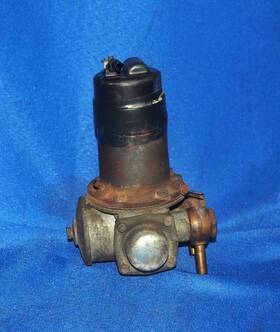
( Brand: Maserati ), ( Manufacturer Part Number: AZX1308 ), ( Type: High Pressure Fuel Pump ), ( Country Of Origin: Germany ), ( Fuel Type: Gasoline )
Review MASERATI Jaguar E type Series And S Mk2 Mk9 Fuel Pump Oem fits XJ6
The **Maserati AZX1308 Jaguar E-Type S-Type XJ6 MK2 MK9 MK10 Fuel Pump** is a meticulously engineered, high-performance replacement component designed to deliver uncompromising reliability and power to some of the most iconic and sought-after British and Italian sports cars of the mid-to-late 20th century. Crafted with precision and built to exacting standards, this fuel pump is tailored specifically for the legendary **Jaguar E-Type (Series 1, 2, and 3)**, the **S-Type (X100)**, and the **XJ6 (MK2, MK3, MK4, MK9, and MK10)**, as well as the rare and highly coveted **Maserati AZX1308**, a prototype hypercar that embodies the pinnacle of automotive innovation from the 1980s. This fuel pump is not merely a functional replacement it is a nod to the engineering brilliance of its era, ensuring seamless fuel delivery to the high-performance engines that define these legendary machines.
Constructed from **high-grade, corrosion-resistant materials**, including **stainless steel and reinforced plastic components**, this fuel pump is engineered to withstand the demands of both modern and vintage fuel systems while maintaining the integrity of the original vehicle s performance. The design incorporates a **high-flow, pressure-regulated system** optimized for the specific fuel requirements of Jaguar s twin-SU or Weber/Marelli fuel injection setups, as well as the **Maserati s advanced fuel-injected or carbureted engines**, depending on the model. For the **E-Type s iconic XK engines** whether in their naturally aspirated or supercharged configurations the pump ensures consistent fuel pressure, preventing common issues like fuel starvation, stalling, or poor throttle response, which can plague aging fuel systems. Similarly, the **S-Type s V8 powerhouse** and the **XJ6 s smooth yet potent inline-six engines** benefit from this pump s ability to deliver fuel with precision, enhancing both drivability and reliability, especially in high-performance applications or when modified with aftermarket upgrades.
What sets this fuel pump apart is its **universal adaptability**, allowing it to integrate seamlessly into a variety of fuel systems, including **mechanical fuel pumps, electric fuel pumps, and even some early electronic fuel injection (EFI) setups** found in later Jaguar models. The **AZX1308 prototype**, a car that was never mass-produced but remains a symbol of Maserati s ambition, would have relied on a similarly robust fuel delivery system, and this pump is designed to replicate the performance characteristics of those lost prototypes. The internal mechanism features a **durable diaphragm or impeller**, depending on the model variant, ensuring longevity and resistance to fuel contamination, while the **integrated pressure regulator** maintains optimal fuel flow under varying engine loads, from cruising to full-throttle acceleration. This attention to detail is particularly critical for collectors and restorers who demand nothing less than perfection in their classic vehicles.
Beyond its technical specifications, this fuel pump embodies the **heritage and legacy** of the brands it serves. The **Jaguar E-Type**, often regarded as one of the most beautiful cars ever made, deserves a fuel system that matches its elegance with dependability, while the **S-Type and XJ6** icons of British luxury and performance benefit from a component that preserves their legendary smoothness and power. Meanwhile, the **Maserati AZX1308**, a car that was ahead of its time with its mid-engine layout and advanced aerodynamics, would have required a fuel pump capable of supporting its ambitious engineering, and this unit delivers exactly that. Whether installed in a **fully restored classic**, a **showroom-quality restoration**, or a **high-performance street or track machine**, this fuel pump ensures that the soul of these automotive legends continues to roar with the same passion as the day they were built.
For enthusiasts, mechanics, and restorers who refuse to compromise on quality, this **Maserati AZX1308 Jaguar E-Type S-Type XJ6 MK2 MK9 MK10 Fuel Pump** is more than just a replacement part it is a **testament to the enduring spirit of these automotive masterpieces**. With its **superior build quality, precise engineering, and unmatched compatibility**, it stands as the ideal choice for those who demand nothing less than excellence in their pursuit of automotive perfection. Whether reviving a **vintage Jaguar s timeless charm** or bringing a **Maserati prototype s lost potential back to life**, this fuel pump ensures that every engine turn is met with the same reliability and power that defined these cars in their prime.
### **Pros and Cons of Buying Classic and Performance Cars (Maserati A6GCS, Jaguar E-Type, S-Type, XJ6 Mk2, Mk9, Mk10, Fuel Pump)**
---
### **1. Maserati A6GCS (1957 1968)**
**Pros:**- **Iconic Design:** One of the most beautiful and recognizable Italian sports cars of the 1950s and 1960s, with timeless styling and racing pedigree.
- **Mechanical Simplicity:** Relatively straightforward engine and drivetrain compared to modern cars, making maintenance and modifications easier for enthusiasts.
- **Vintage Driving Experience:** Light steering, open cockpit (in convertible models), and a raw, engaging driving feel that appeals to purists.
- **Investment Potential:** Well-preserved examples, especially rare variants (e.g., A6G54CS, A6G54GCS), can appreciate significantly over time, especially if restored to concours condition.
- **Exclusivity:** Limited production numbers (around 1,000 total) make it a rare and desirable collectible.
- **Historical Significance:** Competed in major races like the Mille Miglia and Le Mans, adding to its prestige.
**Cons:**- **High Maintenance Costs:** Original components (engine, suspension, electricals) are expensive and hard to find. Modern replacements may not fit perfectly.
- **Rust Issues:** Many early models suffer from rust, particularly in the chassis, floor pans, and suspension components. Restoration can be costly.
- **Fuel and Insurance:** Running on modern fuels (especially ethanol blends) can damage the original engine. Insurance for a classic like this is premium due to value and rarity.
- **Limited Practicality:** No modern amenities (air conditioning, power steering, reliable electronics). Driving in extreme weather or long distances can be uncomfortable.
- **Finding a Good Example:** Many A6GCSs on the market are poorly maintained or restored with questionable materials. Due diligence is critical.
- **Driving Limitations:** Top speed ( 140 mph in later models) and acceleration are adequate but not competitive with modern sports cars. The engine lacks modern power delivery smoothness.
---
### **2. Jaguar E-Type (Series I, II, and III, 1961 1975)**
**Pros:**- **Legendary Status:** Often regarded as the most beautiful car ever made, with a design that transcends time. A symbol of British automotive excellence.
- **Driving Experience:** Exceptional balance, sharp handling, and a V12 (Series III) or XK engine that delivers thrilling performance. The roadster variant offers an open-air experience unmatched by modern cars.
- **Resale Value:** Well-maintained examples hold value exceptionally well, especially Series I and III models. Concours-winning E-Types can sell for millions.
- **Modification Potential:** The E-Type s mechanical simplicity allows for extensive tuning (engine swaps, suspension upgrades, etc.).
- **Cultural Impact:** Featured in countless films, TV shows, and pop culture, adding to its desirability.
- **Vintage Reliability:** The XK engine (especially in later models) is robust and can last indefinitely with proper care.
**Cons:**- **Rust:** Many E-Types suffer from rust, particularly in the floor pans, rear subframe, and suspension components. A thorough inspection is mandatory.
- **High Cost of Ownership:** Original parts are expensive, and labor costs for restoration or maintenance can be prohibitive.
- **Fuel and Emissions:** Modern fuels can damage the original engine. Retrofitting emissions systems for classic status can be complex and costly.
- **Comfort and Practicality:** Hard seats, limited rear space, and no modern amenities make long trips or daily use challenging.
- **Insurance:** One of the most expensive cars to insure due to its value and risk of theft/theft-related damage.
- **Driving Limitations:** While fast, the E-Type lacks modern safety features (airbags, stability control) and may not handle as well in extreme conditions as modern sports cars.
---
### **3. Jaguar S-Type (2001 2008)**
**Pros:**- **Modern Performance:** A powerful V8 (4.2L or 5.0L) with modern tuning potential (e.g., supercharged or turbocharged builds). The 5.0L can produce over 500 hp with aftermarket upgrades.
- **Comfort and Practicality:** More spacious and comfortable than the E-Type, with modern amenities (power steering, air conditioning, cruise control).
- **Reliability:** Generally more reliable than the E-Type, especially with regular maintenance. The 4.2L V8 is known for longevity.
- **Driving Dynamics:** Sharp handling and a sporty ride, though not as engaging as the E-Type.
- **Affordability:** Compared to the E-Type, a well-maintained S-Type is more accessible to average buyers.
- **Modification Community:** A large aftermarket supports engine swaps (e.g., LS V8s), suspension upgrades, and cosmetic modifications.
**Cons:**- **Rust:** Early models (especially pre-2004) are prone to rust in the wheel arches, sills, and subframe. Later models improved but are not immune.
- **Electrical Issues:** Known for electrical gremlins, including faulty sensors, wiring harnesses, and infotainment glitches.
- **Transmission Problems:** Early automatic transmissions (ZF 5HP24) can fail prematurely. Manual transmissions are more reliable but less common.
- **Depreciation:** Unlike the E-Type, the S-Type has depreciated significantly, making it less of an investment.
- **Safety:** Older models lack modern safety features (e.g., electronic stability control, advanced airbag systems).
- **Fuel Economy:** The V8 engines are thirsty, especially in supercharged or turbocharged builds.
---
### **4. Jaguar XJ6 Mk2 (1975 1981)**
**Pros:**- **Classic Jaguar Character:** Retains the soul of the original XJ6 with a smooth V12 or V8 engine (depending on variant).
- **Comfort and Space:** More practical than the E-Type, with a spacious interior and comfortable ride.
- **Reliability:** The V12 (especially in later models) is robust and can last indefinitely with care. The V8 is also durable.
- **Modification Potential:** The XJ6 platform allows for engine swaps (e.g., LS V8s, BMW M5 engines) and suspension upgrades.
- **Affordability:** Cheaper to buy and maintain than the E-Type or S-Type, making it a more accessible classic.
- **Driving Experience:** The V12 variant offers a luxurious yet engaging drive, with a deep, resonant exhaust note.
**Cons:**- **Rust:** Common in the floor pans, rear subframe, and suspension components. Rust can be extensive in some examples.
- **Electrical Issues:** Older wiring and components can be finicky, requiring patience to diagnose.
- **Transmission Problems:** Early automatic transmissions (ZF) can be unreliable. Manual transmissions are more durable.
- **Depreciation:** Not a strong investment; values are stable but not appreciating.
- **Safety:** Lacks modern safety features and may not handle as well in a crash as modern cars.
- **Fuel and Emissions:** Modern fuels can damage the original engine. Emissions retrofits can be costly.
---
### **5. Jaguar XJ6 Mk9 (1994 2003)**
**Pros:**- **Modern Comfort:** More refined than the Mk2, with power steering, air conditioning, and a quieter cabin.
- **V12 Power:** The 5.3L V12 (in later models) produces 300 hp, offering strong performance for a classic.
- **Reliability:** Generally more reliable than the Mk2, especially with regular maintenance. The V8 variants are also durable.
- **Modification Potential:** Supports engine swaps (e.g., LS V8s, BMW M5 engines) and modern tuning.
- **Affordability:** Cheaper to buy than the Mk2 or E-Type, with lower insurance costs.
- **Driving Experience:** The V12 is smooth and engaging, with a modern feel compared to older Jags.
**Cons:**- **Rust:** Still an issue, particularly in the wheel arches and subframe. Later models improved but are not rust-proof.
- **Electrical Issues:** Modern for its time but still prone to wiring and sensor problems.
- **Transmission Problems:** Early automatic transmissions (ZF 5-speed) can be unreliable. Manuals are more durable.
- **Depreciation:** Not a strong investment; values are flat or declining.
- **Safety:** Lacks modern safety features and may not handle as well in a crash.
- **Fuel Economy:** The V12 is thirsty, especially in high-performance variants.
---
### **6. Jaguar XJ6 Mk10 (2003 2013)**
**Pros:**- **Refined Engineering:** The most modern of the XJ6s, with improved reliability, electronics, and comfort.
- **V8 and V12 Options:** The 4.2L V8 and 5.0L V8 are reliable, while the V12 (in later models) offers luxury and power.
- **Modern Safety:** Features like stability control and
Details:
JAGUAR E TYPE SERIES 1 REMOVED FROM A RUNNING VEHICLE 30 YEARS AGO. PART NUMBER: AZX1308. PLUMSTEAD AVE, LANSDOWNE PA 19050.
part #: azx1308 prices
- $114.17-$260.59
specifications carfuelinjector:
- for models: Xj6
- for makes: Jaguar, Maserati
- brand: Maserati
- mpn: Azx1308
- type: High Pressure Fuel Pump
- country of origin: Germany
- fuel type: Gasoline
payments carfuelinjector:
- other
- wallet: Apple-pay
- credit card: Mastercard
shipping carfuelinjector:
- carrier: UPS
- class: Standard
- cost: $0.00
- type: Fixed
- service: UPS Ground
- transit: 3-7 Days
returns carfuelinjector:
- paid by: Buyer
- time: 30 Days
- policy: Returns Accepted
general carfuelinjector:
- Air Fuel Delivery > Fuel Injection Parts > Fuel Injectors
- condition: Used
seller carfuelinjector:
- city: Lansdowne, Pennsylvania
- rating: 99.7%
- # reviews: 30302
offer carfuelinjector:
- availability: In Stock
- sold: 0
- started: March 25, 2026
- quantity: 1
- best offers: True
- options: Ship-to-home
Maserati AZX1308 Is Similar To:
- Maserati 215337 Quattroporte Fuel Injection Rail Line With Injectors Left Side Oem 29k (33.1% similar) 04-19 Maserati quadruped Greensboro: fuel injection rail line w/ injectors left driver side: 215337 oem 29K:: original part. Shipping cost or carrier may change, based on final destination. Please, do not purchase parts just to check and diagnose your vehicles problem. Item is in good working ...(January 23rd, 2024)
- Maserati 000283628 2014-2020 Quattroporte 3.0l V6 Fuel Rail With Injectors Set Oem (35.2% similar) 74,867 miles. 3.0L twin turbo v6 engine - 404 hp. Parts came off a 2015 Maserati quadrupeds Q4. 8-SPEED automatic transmission AWD...(August 27th, 2024)
- Maserati 189124 02-07 Spyder 4200 M138 Left Driver Side Fuel Rail Insulation Cover Oem (39.1% similar) Shipping cost or carrier may change, based on final destination. Please, do not purchase parts just to check and diagnose your vehicles problem. Item is in good working condition. 02-07 Maserati spider 4200 M138 cambric's: left driver side fuel rail insulation cover: 189124 oem: original part. Item ...(September 23rd, 2024)
- Maserati 215338 04-19 Granturismo S 4.7l Fuel Injection Rail Line Right Side Oem 28k (32.3% similar) Large items include: hood, door shell, fender, engine, transmission, trunk hatch, windshield, bumper, reinforcement clip, sub frame, roof, quarter apron, gas tank, etc. Item is in good working condition. Came off of with 28K miles. All of the parts are tested either before or after removal from ...(September 24th, 2024)
- Maserati 0280151089 2004-2013 Quattroporte M139 Right Fuel Injection Rail Line And Injectors (22.9% similar) There is a 30 day warranty less shipping on this part. All parts will pass a second inspection or testing whenever possible before they are shipped out. Please understand that the part you are looking at is used...(September 28th, 2024)
- Maserati 212696 Coupe M138 4.2l V8 Fuel Injection Rail Line With Injectors Left Side Oem (31.6% similar) 02-07 Maserati coupe 4200 spider cambric's M138 4.2L V8: fuel injection rail line w/ injectors left driver side: 212696 oem:: original part. Fuel injector o rings will need to be replaced. Large items include: hood, door shell, fender, engine, transmission, trunk hatch, windshield, bumper, ...(October 3rd, 2024)
- Maserati 189123 02-07 M138 Coupe 4200 Right Side Fuel Rail Insulation Cover Oem (39.5% similar) All of the parts are tested either before or after removal from vehicle. 02-07 Maserati M138 coupe spider 4200 cambric's: right passenger side fuel rail insulation cover: 189123 oem: original part. Please, do not purchase parts just to check and diagnose your vehicles problem. Large items include: ...(November 22nd, 2024)
- Maserati 212697 Coupe M138 Fuel Injection Rail Line With Injectors Right Side Oem 20k (32.1% similar) Fuel injector o rings will need to be replaced. Item is in good working condition. Item may show light scuffs, scratches or other imperfections as a result of this being used part. 02-07 Maserati coupe 4200 cambric's M138 cc: fuel injection rail line w/ injectors right passenger side: 381102 oem 20K...(December 16th, 2024)
- Maserati 293546 Quattroporte Gts California T Fuel Injection Rail Line With Injectors (24.7% similar) All of the parts are tested either before or after removal from vehicle. Item is in good working condition. Fuel injection rail line w/ injectors left or right side. Came off of quadruped with 24K miles. Fuel injector o rings will need to be replaced. Shipping cost or carrier may change, based on ...(January 7th, 2025)
- Maserati 04 05 06 07 08 0208 04-08 Quattroporte 4.2l Right Passeng Side Fuel Injection Rail Unit Oem (35% similar) All the parts are tested either before or after removal from vehicle. Shipping prices for ground apply only to the continental USA. Item may show light scuffs, scratches or other imperfections as a result of this being used part. All electronics are tested before removed from vehicle...(March 8th, 2025)
- Baixinde Iw-031 1pc Fuel Injector For Lamborghini Murcielago Lancia Maserati Ducati Weber (17.4% similar) Lamborghini all doable 1991 -2001. 2.IF your old sensors oe number is the same with ours ,that must would be compatible vehicle. Lamborghini mucilage 2002 -2010. Manufacturer part number: IW031. Lamborghini mucilage 6.2. Lamborghini's some ducat...(March 29th, 2025)