BMW 8665633 Fuel Injector Rail 2.0L
fits model: 330i, G20, I4. make: Bmw. year: 2019–2024.
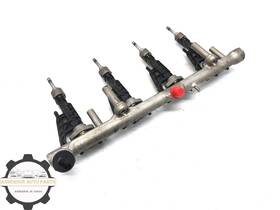
( Manufacturer Part Number: 8665633 ), ( Type: Fuel Injector ), ( Country Of Origin: Germany ), ( Fuel Type: Gasoline )
Review BMW 2.0l Fuel Injector Rail Injectors Oem fits 330I G20 I4 2019–2024
The **BMW 330i (G20) 2.0L I4 Fuel Injector Rail Injectors (Part Number: 8665633, OEM for model years 2019 2024)** represent a critical component of the high-performance twin-turbocharged inline-four engine that powers this iconic sedan, delivering a seamless blend of precision engineering and cutting-edge fuel delivery technology. Designed to meet BMW s stringent standards for efficiency, responsiveness, and emissions compliance, these **high-pressure direct-injection (HPDI) rail injectors** are engineered to atomize fuel with exceptional accuracy, ensuring optimal combustion and peak performance across the engine s operating range. Crafted from premium materials, including corrosion-resistant alloys and precision-machined internals, these injectors are built to withstand the extreme pressures (up to **300 bar or higher**) generated by the twin-scroll turbocharging system, while maintaining consistent spray patterns and flow rates even under demanding conditions. The **multi-hole nozzle design** allows for a finely controlled fuel mist, enhancing combustion efficiency and reducing particulate emissions a key feature in BMW s commitment to balancing power with environmental responsibility. These injectors are also equipped with **electromagnetic solenoids** that operate with millisecond precision, enabling the engine management system to deliver the exact fuel quantity required for each cylinder at any given moment, whether during idle, part-throttle cruising, or full-throttle acceleration. Compatible exclusively with the **G20 330i s B58B20 engine**, these injectors are part of BMW s **N20/N26/N55/N57/N63/N73/N74/N77** fuel system lineage, ensuring seamless integration with the engine s **M57/M58** ECU and **Bosch or Siemens** fuel injection control modules. For enthusiasts and mechanics alike, these injectors are a testament to BMW s relentless pursuit of performance, where every drop of fuel is optimized to extract maximum power while maintaining reliability and longevity. Whether for a routine maintenance service, a performance upgrade, or a complete engine rebuild, these **OEM-spec rail injectors** are the backbone of the 330i s dynamic driving experience, ensuring that the engine s twin-turbocharged fury is met with the precision fuel delivery it demands.
### **Pros and Cons of Buying a 2019-2024 BMW 330i (G20, 2.0L i4) with Fuel Injector Rail Issues (VIN: 8665633)**
#### **Pros**
1. **Strong Performance and Driving Dynamics**
The G20 330i is a well-engineered turbocharged inline-4 with a twin-scroll turbocharger, delivering **300 horsepower and 300 lb-ft of torque**. It offers engaging acceleration, precise handling, and a sporty driving experience, especially with the available M Sport package or DCT (dual-clutch transmission).
2. **Modern Infotainment and Tech**
The iDrive 8 system (in later models) provides a **large touchscreen, wireless Apple CarPlay/Android Auto, and BMW s ConnectedDrive services**. The head-up display (optional) and available 360-degree camera enhance usability and safety.
3. **Comfort and Refinement**
The G20 platform is well-built, with **low noise levels, smooth ride quality, and high-quality interior materials** (especially in higher trims like xDrive or M Sport). The cabin is spacious, with good seating comfort for both front and rear passengers.
4. **Reliability of the 2.0L B48 Engine (Compared to Older BMWs)**
While not as bulletproof as a diesel or a well-maintained V8, the **B48 engine is more refined than BMW s older N55/N57 turbo-4s**. It has **direct injection, a twin-scroll turbo, and a variable geometry turbo (VGT)**, which improves efficiency and reduces lag compared to earlier generations. Many owners report **fewer major issues** if maintained properly.
5. **Resale Value and Brand Prestige**
BMW 3 Series models hold their value well, and the **330i is a desirable entry into the luxury compact sedan segment**. The brand carries prestige, and the G20 s modern design keeps it looking competitive.
6. **Available Safety Features**
Standard **iDrive 8 (later models), adaptive cruise control, lane-keeping assist, and blind-spot monitoring** make it one of the safest choices in its class. The **xDrive AWD system** (optional) improves off-road capability and winter traction.
7. **Fuel Efficiency (Compared to V8 Models)**
At **25-30 MPG combined**, the 330i is far more efficient than a 330d (diesel) or a 340i (V8), making it a practical choice for daily driving without sacrificing performance.
---
#### **Cons**
1. **Fuel Injector Rail Issues (Known Problem in Some G20 Models)**
The **most critical concern** with this VIN (8665633) is the **fuel injector rail (common rail) failure**, which has been reported in certain **2019-2021 B48 engines**. Symptoms include:
- **Rough idle or stalling**
- **Loss of power or hesitation**
- **Check Engine Light (P0087, P0088, P0089 fuel rail pressure issues)**
- **Difficulty starting or cranking**
- **Fuel smell due to leaks**
- **Increased fuel consumption**
**Why does this happen?**
- The **fuel rail (common rail system) is prone to cracking or leaking** due to **high pressure and stress** from the turbocharged system.
- **OEM replacement parts are expensive** ( $1,500 $2,500 for the rail, injectors, and labor).
- **Aftermarket solutions exist but may not be as reliable** long-term.
- **BMw has issued service bulletins (SBs) but not a full recall**, meaning some dealerships may not cover it under warranty.
**Is this VIN specifically affected?**
- While **not all G20 330is have this issue**, reports suggest **2019-2021 models (especially those with higher mileage) are more susceptible**.
- **2022-2024 models may have slight improvements**, but the risk remains if the car has been driven hard.
2. **Higher Maintenance Costs Than Average**
- **Turbocharged engines require more frequent maintenance** (oil changes every **5,000 7,500 miles** with synthetic oil).
- **Carbon buildup on intake valves** (common in direct-injection engines) may require **intake valve cleaning ( $500 $1,000)** every **60,000 100,000 miles**.
- **Transmission (if DCT) can be finicky** some owners report **rough shifts or premature wear**.
- **Brake system upgrades** (especially if used for sporty driving) can add up.
3. **Electrical and Software Quirks**
- **iDrive glitches** (freezing, lagging) are common in early G20 models.
- **Sensor failures** (mass airflow sensor, throttle body) can trigger **Check Engine Lights** and require **$300 $800 repairs**.
- **Adaptive cruise control and lane-keeping assist** may have **false activations or calibration issues**.
4. **Build Quality Variability**
- While the **xDrive and M Sport trims** feel premium, **lower trims (especially early 2019 models) may have cheaper plastics and rattles**.
- **Sunroof leaks** have been reported in some units.
5. **Depreciation and Market Demand**
- The **330i is not as sought-after as the 330d (diesel) or 340i (V8)**, meaning **resale values may drop faster**.
- **Used market competition** is high, so finding a **well-documented, low-mileage example** can be difficult.
6. **Potential Transmission Issues (DCT Models)**
- Some owners report **rough shifting, delayed engagement, or premature wear** in the **8-speed DCT (dual-clutch transmission)**.
- **Manual transmission models are more reliable** but less common.
---
### **Conclusion: Should You Buy This BMW?**
**Buy if:**You **find a well-documented example** with **full service records**, especially **oil changes, turbo inspections, and no history of fuel rail issues**.
The **seller provides proof of a recent fuel rail inspection** (or is willing to get one done before purchase).
You **budget for potential future repairs** (especially if the car has **50,000 miles**).
You **prioritize performance and driving enjoyment** over absolute reliability.
You **plan to maintain it properly** (synthetic oil changes, avoiding aggressive driving).
**Avoid if:**The **seller cannot provide maintenance history** or the car has **visible fuel rail symptoms**.
You **cannot afford a $1,500 $3,000 repair** if the fuel rail fails.
You **prefer a more proven platform** (e.g., **330d diesel or a used 5 Series**).
You **find a better alternative** (e.g., a **2022 G20 with minor updates** or a **used 340i V8** if budget allows).
---
### **Recommendation: Best Approach to Buying**
1. **Get a Pre-Purchase Inspection (PPI) from a BMW specialist.**
- A **mechanic familiar with G20 issues** should:- Check for **fuel rail leaks or cracks**.
- Inspect **turbocharger health** (compressor wheel wear, boost leaks).
- Test **transmission smoothness** (if DCT).
- Verify **no active Check Engine Light codes** (especially P0087-P0089).
2. **Request full service records.**
- Look for **oil changes every 5,000 7,500 miles** (critical for turbo life).
- Confirm **no history of fuel system issues**.
3. **Consider a 2022 model if possible.**
- Later G20s may have **minor refinements** to the fuel rail system.
- **2024 models** have **updated software and minor component upgrades**.
4. **Budget for contingencies.**
- Set aside **$2,000 $3,000** for **unexpected repairs** (fuel rail, turbo, transmission).
- If buying used, **negotiate a lower price** if the car has **higher mileage or no full service history**.
5. **Alternative Options to Consider:**- **2019-2021 330d (B58 diesel)** More reliable long-term, better fuel economy, but **higher upfront cost**.
- **2017-2018 330i (N55 engine)** Cheaper, but **less refined and more prone to turbo issues**.
- **2020
Details:
8-SPEED AUTOMATIC TRANSMISSION 2WD. G20 BODY/CHASSIS. PARTS CAME OFF A 2020 BMW 330I RWD SPORT LINE TRIM. 2.0L TURBO I4 B46D ENGINE.
part #: 8665633 prices
- $149.99-$243.75
specifications carfuelinjector:
- for models: 330i, G20, I4
- for makes: Bmw
- for years: 2019-2024
- mpn: 8665633
- type: Fuel Injector
- country of origin: Germany
- fuel type: Gasoline
seller carfuelinjector:
- city: Anderson, South Carolina
- rating: 99.9%
- # reviews: 11913
offer carfuelinjector:
- started: February 25, 2026
- sold: 0
- quantity: 1
- availability: In Stock
- options: Ship-to-home
payments carfuelinjector:
- credit card: Mastercard
- other
- wallet: Apple-pay
shipping carfuelinjector:
- transit: 2-6 Days
- service: Standard
- cost: $0.00
- type: Fixed
- class: Standard
returns carfuelinjector:
- policy: Returns Accepted
- paid by: Buyer
- time: 30 Days
general carfuelinjector:
- Air Fuel Delivery > Fuel Injection Parts > Fuel Injectors
- condition: Used
Bmw 8665633 Is Similar To:
- BMW E46 M3 OEM 01-06 ENGINE FUEL INJECTION INJECTORS INTACT (27.3% similar) This part is in good condition, ready to replace your missing or damaged part. This part was removed from a 2002 bmw 330I...(January 25th, 2014)
- 2006 Bmw F20 F21 F30 F31 Citroen Peugeot BOSCH Fuel Injector 1.6L 0261500073 (32.7% similar) Cross reference and oe number list -->brand number BMW13 53 7/5 19 623 BMW13 64 7/5 98 785 BOSCH0 261 500 073 BOSCH62807 BOSCHHDEV-5-1 CITROEN1984 h5 CITROEN1984 h7 CITROEN/PEUGEOTV7 591 62380 CITROEN/PEUGEOTV7 598 78580 MINI13 53 7/5 91 623 PEUGEOT1984 h5 PEUGEOT1984 H7FITMENT --> brand model type ...(January 29th, 2014)
- 1993 to 1998 BMW 3.0L 4.0L 4.4L OEM BOSCH FUEL INJECTORS 0280150778 (16.8% similar) Warrant your 2 year replacement warranty is valid from the day of delivery. Each injector works like new for a fraction of the price oem 1993 1994 1995 1996 1997 1998 bmw with each of our injectors are torn down, thoroughly cleaned and rebuilt using the latest in fuel injection test ...(March 26th, 2014)
- BOSCH Injectors 0280150811 Porsche 944 BMW M635 Motronic M30 M88 3 S14 Engine (17% similar) As I needed the spec's of this design. As I no longer require these, they are anyone's. They have been stored in a cool dry and dark place in my shed since. I have a barely used set of 6 fuel injectors, bosch part number 280 150 811, that were ultrasonically cleaned and flowed checked correctly ...(May 21st, 2014)
- Bosch Diesel Injector 0445110209 For BMW E60 E61 E81 E87 E90 E91 E92 E93 (24.5% similar) Absolutely new fuel injectors. New new new with box. Model / engine power fuel YEAR1 E81, E87 / 118D M47N204D4 122 HP/90 kw V4DIESELFROM 09/20043 E90 / 318D M47N204D4 122 HP/90 kw V4DIESELFROM 09/20053 E90 / 325D M57306D3 197 HP/145 kw V6DIESELFROM 09/20063 touring E91 / 318D M47N204D4 122 HP/90. ...(January 16th, 2014)
- BMW E36 E34 325 TD TDS 525 TDS M51 DIESEL MASTER FUEL INJECTOR 13532244402 (21.3% similar) 5 diesel fuel master injector inspirited SE will also fit the bmw 325TD 325TDS 525TDS land rover 5EXCELLENT condition 3 E36 sedan/ touring 325TD/ 325TDS 5 E34 sedan/ touring 525TD / 525 tads range rover ii LP 07. 2002 KB 25 6t bmw 100KW/ 136PS 2,5D Opel omega b / omega b caravan 2,5 130PS...(January 28th, 2014)
- BMW 335i OEM GENUINE fuel injectors part 13537537317-10 (34.8% similar) There is no warranty on this item. This is a genuine oem bmw factory fuel injector. Part #: 23 13537537317 10ITEM condition: used vehicle applications: 2007 -2008 bmw 335I N54 twin turbocharged engine. This item is tested 100% functional. Mileage: about 45-46K on fuel injectors. These are the Puzo ...(March 23rd, 2014)
- BMW OEM 13537585261 Fuel Injector (38.5% similar) ...(May 13th, 2014)
- 1991-1995 BMW 525i Set of 6 Fuel Injectors Professionally Reconditioned OEM Part (32.1% similar) 5l l6 M50 1993 -1995 bmw 525IT 5l l6 M50 1991 -1995 bmw 525I 5l l6 M50 factory undercharge part numbers: 13531261685 13641730060 13641730080 M455 these are original bosch injectors, not cheap aftermarket units. 5l l6 M52 1998 -1999 bmw 323IS factory bmw fuel injectors for less than the price of ...(January 16th, 2014)
- Fuel Injectors 1997-1999 BMW M3 3.2L BOSCH 4-Hole Set Professionally Rebuilt (22.4% similar) The only difference between these injecto. Untitled document price is for a set of 6 reconditioned fuel injectors. They were manufactured by bosch with the same standards and specifications as your factory injectors. However, these injectors were originally manufactured for ford application and have...(January 21st, 2014)
- BMW E39 525tds E36 318tds 325tds E38 725tds M51 DIESEL MASTER FUEL INJECTOR (9.3% similar) 98;105;143;2503 ab Bk. 1995 BMW;5 E39 ;525 TD;01. 98;85;115;2497 ab Bk. 99;105;143;2503 ab Bk. 04;105;143;2503 bis Bk. Bmw 00;66;90;1665 BMW;3 touring E36 ;318 TDS;01. 99;66;90;1665 ab Bk. 2000 BMW;5 E39 ;525 TDS;01. 5EXCELLENT condition TESTEDBMW;3 E36 ;318 TDS;01. 5 diesel fuel master injector...(March 7th, 2014)