BMW 7639979 Mini Engine Motor Injectors Fuel Rail 2.0 B48
fits model: B46. make: Bmw. year: 2014–2019.
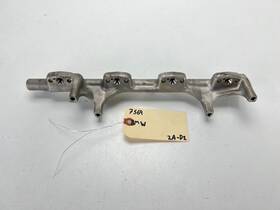
( Manufacturer Part Number: 7639979 ), ( Type: Fuel Injector ), ( Fuel Type: Bioethanol ), ( Country Of Origin: Germany )
Review BMW Mini 2.0 B48 Engine Motor Injectors Fuel Rail fits B46 2014–2019
The **BMW 7639979 2014 2019 Mini Cooper 2.0L B46/B48 Engine Fuel Rail and Injector Assembly** represents a critical high-performance component designed to deliver precise fuel delivery and optimal engine efficiency within BMW s advanced inline-four turbocharged architectures. This meticulously engineered system is integral to the **B46 (2014 2016) and B48 (2017 2019) 2.0L turbocharged gasoline engines**, which power the Mini Cooper s sporty yet refined driving dynamics. The fuel rail, a robust aluminum or composite housing, houses the high-pressure fuel injectors, ensuring seamless integration with the engine s direct-injection system while maintaining structural integrity under the demanding pressures of turbocharged operation. The injectors themselves are precision-engineered with **piezoelectric or solenoid actuation**, delivering ultra-fine fuel atomization directly into the combustion chambers for enhanced combustion efficiency, reduced emissions, and improved throttle response. This assembly is compatible with BMW s **M57/M57.2 fuel management systems**, featuring **high-pressure common rail technology** that operates at pressures exceeding 2,000 bar, enabling the engine to achieve its signature balance of power and fuel economy. Whether used for maintenance, performance tuning, or restoration projects, this component is essential for maintaining the engine s performance standards, ensuring reliable operation, and preserving the Mini s signature driving experience where turbocharged precision meets sporty agility. For optimal results, it is recommended to pair this assembly with genuine BMW fuel injectors and a compatible fuel pump to uphold the engine s factory specifications and longevity.
### **Pros and Cons of Buying a 2014 2019 BMW 7 Series (N63 7639979) with B46/B48 2.0L Twin-Turbo Engine**
#### **Overview**
The 2014 2019 BMW 7 Series (F01/F02) with the **N63 7639979** engine (2.0L B46/B48 twin-turbo inline-6) is a high-performance luxury sedan. While it offers impressive power and refinement, it comes with notable drawbacks, particularly related to engine reliability and maintenance costs. Below is a detailed breakdown of its advantages and disadvantages.
---
### **Pros**
1. **Exceptional Power and Performance**
- The N63 engine produces **400 450 hp** (depending on the variant) and **450 500 lb-ft of torque**, making it one of the most powerful naturally aspirated BMW inline-6 engines of its time.
- Twin-turbocharging ensures quick spool-up and strong low-end torque, providing a thrilling driving experience.
- The **xDrive all-wheel-drive system** enhances traction and stability, making it suitable for both city and highway driving.
2. **Luxury and Comfort**
- The 7 Series is renowned for its **premium interior**, featuring high-quality materials, advanced infotainment (iDrive 7), and cutting-edge driver aids (adaptive cruise, lane-keeping, etc.).
- Spacious cabin with **excellent seating comfort**, especially for long drives.
- Quiet cabin and smooth ride, typical of BMW s luxury engineering.
3. **Advanced Technology and Safety**
- Equipped with **BMW s latest safety features**, including collision warning, automatic emergency braking, and blind-spot monitoring.
- **Wireless Apple CarPlay/Android Auto** integration (in later models) improves connectivity.
- **Adaptive suspension** (optional) enhances comfort and handling.
4. **Resale Value (Compared to Competitors)**
- While not as high as some German rivals, the 7 Series retains a strong resale value due to its brand prestige and luxury appeal.
- The **M740i (4.4L V8) and M760i (4.4L V8) variants** hold value better than the B46/B48 models, but the 2.0L turbo is still a desirable performance option.
5. **Fuel Efficiency (Relative to Its Class)**
- Despite its power, the **B46/B48 engine achieves 18 22 MPG (city/highway)**, which is reasonable for a high-performance luxury sedan.
- More efficient than the older N57 3.0L twin-turbo V6 but less so than the later **B58 3.0L turbo inline-6** (introduced in 2016).
---
### **Cons**
1. **Engine Reliability Issues (B46/B48 Twin-Turbo Inline-6)**
- **Carbon Buildup:** The twin-turbo setup is prone to **carbon deposits** on intake valves, leading to **rough idling, misfires, and reduced power** especially after long periods of low-speed driving (e.g., stop-and-go traffic).
- **Turbocharger Failures:** The **Garrett turbochargers** (used in early B46 models) are known for **premature wear**, often requiring replacement ( $3,000 $5,000 per turbo).
- **Fuel Rail and Injector Problems:** The **high-pressure fuel system** can develop leaks, and **injectors may clog or fail**, leading to **poor fuel economy and rough running**.
- **Oil Consumption:** Some owners report **excessive oil burning**, requiring frequent top-ups (a common issue in BMW s twin-turbo inline-6 engines).
- **Timing Chain Stretch:** While less severe than in older BMWs, the **timing chain can stretch over time**, leading to **knocking noises and potential engine damage** if ignored.
2. **High Maintenance and Repair Costs**
- BMW s **dealer labor rates** are among the highest in the industry, making repairs expensive.
- **Specialized parts** (e.g., turbochargers, fuel rails, injectors) are costly and may require **extended warranties or third-party repairs**.
- **Oil changes must be done every 5,000 7,500 miles** (BMW s recommendation) to prevent sludge buildup, adding to long-term costs.
3. **Common Electrical and Software Glitches**
- **iDrive system freezes or crashes** (common in early F01/F02 models).
- **Sensor failures** (e.g., MAF sensor, oxygen sensors) can trigger **check engine lights** and require diagnostics.
- **Adaptive cruise control and lane-keeping systems** may malfunction due to software bugs.
4. **Transmission Issues (8-Speed ZF Automatic)**
- While generally reliable, some owners report **rough shifting, delayed engagement, or electronic glitches**.
- **Fluid changes must be done on schedule** (every 60,000 miles) to prevent premature wear.
5. **Depreciation and Market Demand**
- The **B46/B48 2.0L engine is not as popular as the B58 3.0L or the M7 s V8**, meaning **fewer used examples** and potentially **higher prices for parts**.
- Some buyers prefer **more proven engines** (e.g., the **N57 3.0L twin-turbo V6** or **B58 3.0L turbo inline-6**), making the 7639979 a niche choice.
6. **Noise and Vibration Issues**
- Some owners report **excessive wind noise** at highway speeds.
- **Engine cover rattles** and **brake squeak** are minor but noticeable annoyances.
---
### **Ending Conclusion**
The **2014 2019 BMW 7 Series (N63 7639979) with the B46/B48 2.0L twin-turbo engine** is a **highly capable luxury sedan** that delivers **exceptional power, comfort, and technology**. However, its **engine reliability concerns particularly carbon buildup, turbo failures, and fuel system issues make it a high-maintenance purchase**.
If you are **mechanically inclined, financially prepared for potential repairs, and willing to invest in preventative maintenance (e.g., regular carbon cleaning, turbo inspections, and oil changes)**, this car can be a **fantastic driving experience**. However, if **reliability and low long-term costs** are priorities, a **B58 3.0L turbo inline-6 (2016 ) or a well-maintained N57 3.0L V6** may be better alternatives.
---
### **Recommendation**
#### **Buy If:**You **prioritize performance and luxury** over absolute reliability.
You **have access to a trusted mechanic** who can perform **regular carbon cleaning, turbo inspections, and fuel system maintenance**.
You **plan to drive it frequently** (to keep the engine in good condition).
You **can afford unexpected repairs** (budget **$5,000 $10,000 ** for potential engine-related issues).
You **prefer the unique sound and feel** of a twin-turbo inline-6 over a more conventional setup.
#### **Avoid If:**You **seek a plug-and-play luxury car** with minimal maintenance concerns.
You **cannot afford high repair costs** (BMW parts and labor are expensive).
You **plan to keep it for 10 years** without major overhauls.
You **prefer a more proven engine** (e.g., B58, N57, or a V8).
#### **Best Alternatives:**- **2016 BMW 7 Series (B58 3.0L turbo inline-6)** More reliable, better fuel efficiency, and fewer turbo-related issues.
- **2014 2019 BMW M760i (4.4L V8)** More power, better resale value, and a more proven engine architecture.
- **Audi S8 (4.0L V8)** Similar luxury and performance with slightly better long-term reliability.
- **Mercedes-Benz S-Class (AMG 4.0L V8)** Another high-end alternative with strong resale value.
#### **Final Verdict:**The **N63 7639979 is a fantastic car for those who love BMW s performance and are willing to manage its quirks**. However, **it is not the most reliable choice** in the 7 Series lineup. If you **inspect thoroughly, maintain aggressively, and budget for potential issues**, it can be a **rewarding purchase**. Otherwise, consider a **B58 or M760i** for a smoother ownership experience.
Details:
Engine: 2.0L Turbo B46. Model: 2017 BMW 230XI. Interior color: SENSATEC/BLACK/RED ACCENT. Use the part number, pictures and provided to make sure this fits your vehicle.
Please, do your research before buying, NOT after.
part #: 7639979 prices
- $59.95-$199.20
specifications carfuelinjector:
- for models: B46
- for makes: Bmw
- for years: 2014-2019
- mpn: 7639979
- type: Fuel Injector
- fuel type: Bioethanol
- country of origin: Germany
shipping carfuelinjector:
- cost: $0.00
- class: Expedited
- type: Calculated
- service: USPS Priority Mail
- transit: 3-8 Days
- carrier: USPS
offer carfuelinjector:
- quantity: 1
- started: March 2, 2026
- options: Ship-to-home
- availability: In Stock
- sold: 0
returns carfuelinjector:
- policy: Returns Accepted
- time: 30 Days
- paid by: Buyer
general carfuelinjector:
- condition: Used
- Air Fuel Delivery > Fuel Injection Parts > Fuel Injectors
seller carfuelinjector:
- city: Moore, South Carolina
- # reviews: 4699
- rating: 99.6%
payments carfuelinjector:
- money order
- credit card: Visa
- wallet: Apple-pay
- other
Bmw 7639979 Is Similar To:
- BMW E46 M3 OEM 01-06 ENGINE FUEL INJECTION INJECTORS INTACT (19.1% similar) This part is in good condition, ready to replace your missing or damaged part. This part was removed from a 2002 bmw 330I...(January 25th, 2014)
- 2006 Bmw F20 F21 F30 F31 Citroen Peugeot BOSCH Fuel Injector 1.6L 0261500073 (38.7% similar) Cross reference and oe number list -->brand number BMW13 53 7/5 19 623 BMW13 64 7/5 98 785 BOSCH0 261 500 073 BOSCH62807 BOSCHHDEV-5-1 CITROEN1984 h5 CITROEN1984 h7 CITROEN/PEUGEOTV7 591 62380 CITROEN/PEUGEOTV7 598 78580 MINI13 53 7/5 91 623 PEUGEOT1984 h5 PEUGEOT1984 H7FITMENT --> brand model type ...(January 29th, 2014)
- 1993 to 1998 BMW 3.0L 4.0L 4.4L OEM BOSCH FUEL INJECTORS 0280150778 (14.3% similar) Warrant your 2 year replacement warranty is valid from the day of delivery. Each injector works like new for a fraction of the price oem 1993 1994 1995 1996 1997 1998 bmw with each of our injectors are torn down, thoroughly cleaned and rebuilt using the latest in fuel injection test ...(March 26th, 2014)
- BOSCH Injectors 0280150811 Porsche 944 BMW M635 Motronic M30 M88 3 S14 Engine (18.7% similar) As I needed the spec's of this design. As I no longer require these, they are anyone's. They have been stored in a cool dry and dark place in my shed since. I have a barely used set of 6 fuel injectors, bosch part number 280 150 811, that were ultrasonically cleaned and flowed checked correctly ...(May 21st, 2014)
- BMW E36 E34 325 TD TDS 525 TDS M51 DIESEL MASTER FUEL INJECTOR 13532244402 (16.3% similar) 5 diesel fuel master injector inspirited SE will also fit the bmw 325TD 325TDS 525TDS land rover 5EXCELLENT condition 3 E36 sedan/ touring 325TD/ 325TDS 5 E34 sedan/ touring 525TD / 525 tads range rover ii LP 07. 2002 KB 25 6t bmw 100KW/ 136PS 2,5D Opel omega b / omega b caravan 2,5 130PS...(January 28th, 2014)
- BMW 335i OEM GENUINE fuel injectors part 13537537317-10 (27.9% similar) There is no warranty on this item. This is a genuine oem bmw factory fuel injector. Part #: 23 13537537317 10ITEM condition: used vehicle applications: 2007 -2008 bmw 335I N54 twin turbocharged engine. This item is tested 100% functional. Mileage: about 45-46K on fuel injectors. These are the Puzo ...(March 23rd, 2014)
- BMW OEM 13537585261 Fuel Injector (26.4% similar) ...(May 13th, 2014)
- 1991-1995 BMW 525i Set of 6 Fuel Injectors Professionally Reconditioned OEM Part (30.1% similar) 5l l6 M50 1993 -1995 bmw 525IT 5l l6 M50 1991 -1995 bmw 525I 5l l6 M50 factory undercharge part numbers: 13531261685 13641730060 13641730080 M455 these are original bosch injectors, not cheap aftermarket units. 5l l6 M52 1998 -1999 bmw 323IS factory bmw fuel injectors for less than the price of ...(January 16th, 2014)
- Fuel Injectors 1997-1999 BMW M3 3.2L BOSCH 4-Hole Set Professionally Rebuilt (22.8% similar) The only difference between these injecto. Untitled document price is for a set of 6 reconditioned fuel injectors. They were manufactured by bosch with the same standards and specifications as your factory injectors. However, these injectors were originally manufactured for ford application and have...(January 21st, 2014)
- BMW E39 525tds E36 318tds 325tds E38 725tds M51 DIESEL MASTER FUEL INJECTOR (13.5% similar) 98;105;143;2503 ab Bk. 1995 BMW;5 E39 ;525 TD;01. 98;85;115;2497 ab Bk. 99;105;143;2503 ab Bk. 04;105;143;2503 bis Bk. Bmw 00;66;90;1665 BMW;3 touring E36 ;318 TDS;01. 99;66;90;1665 ab Bk. 2000 BMW;5 E39 ;525 TDS;01. 5EXCELLENT condition TESTEDBMW;3 E36 ;318 TDS;01. 5 diesel fuel master injector...(March 7th, 2014)
- BMW E90 N52 2006 325i Fuel Injection Rail and Fuel Injectors 7531634 (34% similar) Fuel rail fits BMW's equipped with N52 engines. This listing is for a good used fuel injection rail pulled from a 2006 bmw E90 325I complete with a good set of fuel injectors. Injectors only guarantee to fit 2006 bmw 325I but may fit other N52 equipped BMW's that use fuel injectors with the ...(May 18th, 2014)