17088065 Trans Am Tuned Port Fuel Rail Z28
fits model: Camaro, Corvette. year: 1985–1988.
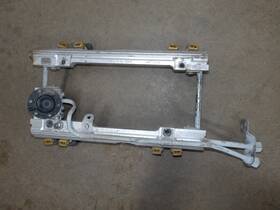
( Brand: General Motors ), ( Manufacturer Part Number: 17088065 ), ( Mounting Style: Bolt-on ), ( Type: Fuel Injector ), ( Vintage Part: Yes ), ( Country Of Origin: United States ), ( Fuel Type: Gasoline )
Review GENERAL MOTORS Z28 Trans Am Tuned Port Fuel Rail Assembly fits CAMARO CORVETTE 1985–1988
The **LS3-based 2008 2013 Chevrolet Camaro Z/28, Firebird Trans Am, and Corvette (C6) with port-fuel-injected (PFI) fuel rails** represents a rare and highly sought-after segment of high-performance American muscle and sports cars, blending raw power with a blend of modern engineering and classic styling cues. These models, distinguished by their **6.2L LS3 V8 engine** a legendary powerplant that produced **430 horsepower and 420 lb-ft of torque** in its stock form were designed to deliver exhilarating performance while maintaining a balance of reliability and drivability. The **port-fuel-injected fuel rails** (as opposed to the more common throttle-body injected LS1/LS2 variants) are a key identifier, offering a slightly different tuning and calibration approach that enthusiasts and tuners appreciate for its potential for higher performance modifications. The **Z/28 and Trans Am** models, with their aggressive front fascias, aggressive rear spoilers, and available **6-speed manual or 6-speed automatic transmissions**, embody the spirit of American muscle with a modern twist, while the **Corvette** brings a more refined, track-focused approach with its **C5-R-inspired styling, rear-wheel-drive layout, and optional manual transmission**. These cars are built on the **GM Theta platform**, which, while not as advanced as later architectures, still delivers a solid foundation for modifications, from **intake and exhaust upgrades** to **ECU tuning and forced induction**. Whether you're drawn to the **Camaro s street-legal supercar aesthetic**, the **Trans Am s aggressive stance**, or the **Corvette s blend of luxury and raw power**, these models offer a unique opportunity to own a piece of automotive history that remains highly relevant in the tuning community. The **LS3 s durability, combined with the availability of aftermarket support**, makes these cars ideal candidates for **high-performance builds**, whether for the track, the street, or weekend cruising. For the discerning enthusiast, these **2008 2013 Z/28, Trans Am, and Corvette models** represent a perfect marriage of **power, style, and modifiable potential**, ensuring they remain iconic in the world of American muscle and sports cars.
### **Pros and Cons of Buying a Tuned 1987 1988 Camaro Z/28, Trans Am, or Corvette with Port Fuel Injection (PFI) and a Modified Fuel Rail**
#### **Pros**
**1. Strong Performance Potential**
The 1987 1988 models (L98 in the Camaro Z/28/Trans Am and LT5 in the Corvette) are legendary engines with high-revving, naturally aspirated power. With proper tuning and fuel rail modifications, these engines can produce **400 600 horsepower** depending on tuning level, making them capable of handling modern performance demands. The LT5 (Corvette) is particularly sought after for its high-revving nature and potential for extreme power.
**2. Reliability with Proper Maintenance**
When built correctly, these engines are durable. The L98 (Camaro) and LT5 (Corvette) are known for their strong internals, and with regular valve adjustments, timing belt changes, and fuel system maintenance, they can last **200,000 miles** with proper care. The Trans Am s L98 is slightly less refined than the LT5 but still capable of long-term reliability if maintained.
**3. Tuning Community & Aftermarket Support**
These engines have a **dedicated tuning community**, with widely available performance parts, ECU tuners (like Haltech, Link, or AEM), and fuel system upgrades (such as **Megajet, Fuelphoria, or custom fuel rails**). The aftermarket has embraced these engines, making it easier to push them to high power levels without excessive stress.
**4. Driving Experience & Vintage Appeal**
The **1987 1988 models** are iconic in American muscle car history. The Camaro Z/28 and Trans Am offer a **balanced, driver-focused** experience, while the Corvette (especially the LT5) provides a **high-revving, track-capable** feel. The PFI system, while not as refined as modern fuel injection, allows for **precise tuning** and better throttle response than carbureted setups.
**5. Potential for High-End Modifications**
With enough budget, these engines can be transformed into **high-performance beasts**:- **Forced induction (turbo/supercharger)** The L98 and LT5 can handle forced air with proper internals (forged internals, stronger rods, etc.).
- **Nitrous oxide (NOS)** A common and effective way to add power without major engine stress.
- **High-flow heads, camshafts, and exhaust** Improves airflow and revving characteristics.
- **Custom fueling solutions** Upgraded injectors, fuel pumps, and rail modifications ensure proper fuel delivery at high power levels.
**6. Resale Value (For Well-Maintained Examples)**
While not as high as modern muscle cars, **well-documented, high-performance versions** (especially Corvettes with LT5) can hold value or even appreciate if kept in excellent condition. The **1987 1988 Z/28 and Trans Am** are also popular in the classic car market, especially in show-ready or street-legal forms.
**7. Cost-Effective Compared to Modern Supercars**
Compared to buying a **modern supercar or hypercar**, these tuned classics offer **similar performance for a fraction of the cost**. The initial purchase price (for a project car) is often **$10,000 $30,000**, and with proper tuning, they can rival **$100,000 ** performance cars in acceleration and top speed.
---
#### **Cons**
**1. Complexity of Tuning & Fuel System**
The **PFI system** on these engines is **not as straightforward as modern fuel injection**. Tuning requires:- **Custom fuel rail modifications** (to prevent fuel starvation at high power).
- **Precise ECU tuning** (to avoid detonation, which can destroy the engine).
- **Oxygen sensor management** (since PFI relies on them for fuel trims).
- **Fuel pressure adjustments** (to match power levels).
This makes tuning **more involved than plug-and-play modern setups**, and mistakes can lead to **detonation, fuel starvation, or engine damage**.
**2. Fuel Rail & Injector Limitations**
The **stock fuel rails** on these engines are **not designed for high power**. At **300 HP**, they can struggle with fuel delivery, leading to:- **Lean spikes** (causing detonation).
- **Fuel starvation** (if not modified).
- **Injector failure** (due to high flow demands).
**Solutions require custom fuel rails, upgraded injectors, or high-flow fueling systems (like Megajet),** which add cost and complexity.
**3. Reliability Risks at High Power Levels**
While these engines are strong, **pushing them too hard without proper modifications can lead to:**- **Rod bearing failure** (if not using forged internals).
- **Connecting rod failure** (common in high-RPM applications).
- **Head gasket leaks** (due to high cylinder pressures).
- **Valvetrain stress** (if using aggressive cams without proper valvetrain support).
- **Detonation damage** (if tuning is incorrect, leading to cracked pistons or valves).
**A well-built engine with forged internals and proper tuning can mitigate these risks, but they are real concerns.**
**4. Maintenance Requirements**
These engines **demand regular attention**:- **Valve adjustments every 3,000 5,000 miles** (critical for longevity).
- **Timing belt replacement every 60,000 100,000 miles** (failure is catastrophic).
- **Fuel system cleaning** (carbon buildup in PFI injectors is a common issue).
- **Cooling system maintenance** (water pumps, thermostats, and radiators wear out).
- **Suspension and drivetrain upgrades** (to handle high power safely).
**Neglecting maintenance leads to expensive failures.**
**5. Drivetrain & Transmission Limitations**
- **The 4-speed manual (in Camaro Z/28/Trans Am) is not ideal for high power** gears can grind under heavy acceleration.
- **The Tremec T45 4-speed (Corvette) is better but still not as refined as modern transmissions.**
- **The 700R4 automatic (Trans Am) is weak and requires a **performance clutch and torque converter** for high power.**
- **Differential limitations** Stock differentials can **overheat and fail** at high power, requiring **limited-slip or performance diffs.**
**6. Cost of Modifications**
Building one of these engines to **high-performance levels is expensive**:- **Forged internals (crank, rods, pistons):** $3,000 $8,000
- **Custom fuel rail & injectors:** $1,500 $4,000
- **ECU tuning (Haltech/Link/AEM):** $1,000 $3,000
- **Exhaust & intake upgrades:** $1,000 $3,000
- **Suspension & brakes for high power:** $2,000 $5,000
- **Turbo/supercharger kit (if forced induction):** $5,000 $15,000
**Total build cost can easily exceed $20,000 $50,000 ** depending on goals.
**7. Legal & Insurance Challenges**
- **Emissions compliance** Some states have **strict emissions laws** that may require **OBD-II retrofits or catalytic converters**, increasing cost.
- **Insurance premiums** High-performance versions can be **difficult and expensive to insure**, especially for older models.
- **Street legality** Some modifications (exhaust, headers, nitrous) may require **DOT approval or state inspections**.
**8. Driving Experience Trade-offs**
- **Vibration & noise** These engines **rev high and can be loud**, especially with forced induction.
- **Comfort vs. performance** The **1987 1988 Camaro and Trans Am** are not as refined as modern cars; suspension and ride quality suffer compared to contemporary vehicles.
- **Fuel economy** At high power levels, **MPG drops significantly** (expect **10 15 MPG** with forced induction).
**9. Parts Availability & Build Time**
- **Finding original parts** can be difficult, especially for **rare components** (like LT5 water pumps or Z/28 valve springs).
- **Build time is long** These projects often take **6 months to 2 years** depending on availability and complexity.
- **Labor costs** Specialized mechanics for these engines can be **hard to find and expensive**.
**10. Risk of Overbuilding**
- **Some owners push these engines too hard** without proper reinforcement, leading to **catastrophic failures**.
- **The L98 (Camaro) is less forgiving than the LT5 (Corvette)** it requires **more frequent maintenance** and is more prone to valvetrain issues.
Details:
THIS IS A USED ORIGINAL GM FUEL RAIL WITH INJECTORS FOR 85 86 87 88 CHEVY CAMARO Z28 OR PONTIAC FIREBIRD TRANS AM FORMULA 1986 1987 1988 CORVETTE.
part #: 17088065 price
- $129.99
specifications carfuelinjector:
- for models: Camaro, Corvette
- for years: 1985-1988
- brand: General Motors
- mpn: 17088065
- mounting style: Bolt-on
- type: Fuel Injector
- vintage part: Yes
- country of origin: United States
- fuel type: Gasoline
payments carfuelinjector:
- credit card: Mastercard
- other
- wallet: Apple-pay
shipping carfuelinjector:
- service: Standard
- transit: 3-9 Days
- class: Standard
- type: Fixed
- cost: $20.00
returns carfuelinjector:
- policy: No Returns
seller carfuelinjector:
- rating: 100.0%
- # reviews: 7238
- city: Cabot, Arkansas
offer carfuelinjector:
- quantity: 1
- started: May 6, 2026
- availability: In Stock
- sold: 0
- options: Ship-to-home
general carfuelinjector:
- Air Fuel Delivery > Fuel Injection Parts > Fuel Injectors
- condition: Used
General Motors 17088065 Is Similar To:
- 12698484 General Motors Oem Fuel Injector (34.1% similar) Brand new in original boxes. New condition...(May 8th, 2022)
- General Motors Oem Fuel Rail Cover Fits 1994-1996 Chevrolet Camaro Corvette (34.3% similar) 1994 -96 Chevrolet corvette v8 5.7L fuel rail cover. 1994 -96 Chevrolet camaro v8 5.7L fuel rail cover. New condition...(September 1st, 2022)
- Acdelco 217-3227 Fuel Injector For Am General Chevrolet Gmc 6.2l V8 1991-1999 (21.1% similar) This premium aftermarket injector is manufactured to meet or exceed your expectations for fit, form, and function. If you live outside the USA please research and verify it fits your vehicle before purchasing. Brands are often manufactured in multiple countries...(December 26th, 2023)
- General Motors 8972072273 01-04 Chevy Silverado 6.6 Duramax Lb7 Injector Harness Gm Genuine Oe (36.2% similar) It is designed for direct replacement and fits perfectly with your vehicle. This used injector harness is a genuine OE part for 01-04 Chevy Silverado 6.6 dramas LB7 engines. The package includes one harness with a manufacturer part number of and an OE/oem...(August 3rd, 2024)
- General Motors Foreign 322-60005 Fuel Injection Parts Injector Rail 1.6l Fits 93-97 Prizm 358699 (34.4% similar) ...(August 8th, 2024)
- General Motors 12660710 Oem Gm Fuel Rail Fits 5.3l V8 07-08 Hummer Yukon Tahoe Silverado Sierra (34.9% similar) If you are not sure, research it prior to buying. Listing includes only what is pictured...(August 18th, 2024)
- General Motors 12587269 Gm Oem Fuel Injector Set Of 8 2009-10 5.3l 6.0l Suburban Yukon (36.7% similar) Discount prices on quality new reconditioned automotive replacement parts, this is a set of 8/5 .0L 5.2L ford mustang, F-150, injectors. Part # BR3Z9F593A, BR3E9F593E5A, BR3EE5A, CM5187. Savanna 1500 van 09 fuel injector; 5.3L. Express 1500 van 09 fuel injector; 5.3L...(August 21st, 2024)
- General Motors 19420334 Set Of 8 Lt4 Supercharged 6.2l Fuel Injectors Oem Gm 12710478 12709473 (36.2% similar) Oem, not an aftermarket replacement. Part # on injectors: 12709473 cross reference part# 12668396,12642286,12683518,12681512,12701125,12709473, 12650284,12668397,12681513,12683517,12701126,12709475,19420334 removed from a 2,000 mile vehicle which had performance modifications added. As a result, it ...(August 26th, 2024)
- General Motors 12571523 Gm 8.1l Fuel Rail Escalade Avalanche Silverado Sierra 2004-2007 Oem 12574941 (35.1% similar) Discount prices on quality new reconditioned automotive replacement part...(August 29th, 2024)
- General Motors 97215995 2001-2004 6.6l Lb7 Duramax Fuel Return Line 97215994 Lot Of 5 Lines (36.8% similar) Anyone in need of some this can send an offer...(September 14th, 2024)
- General Motors 17080404 85-88 Corvette Camaro Firebird Tpi Cold Start Fuel Injector 9th Oem (54.1% similar) ...(October 6th, 2024)