AUDI 06G906036F Gas Engine High Pressure Fuel Injector Set 06C906036 3.0L
fits model: Q7. make: Audi. year: 2017–2019.
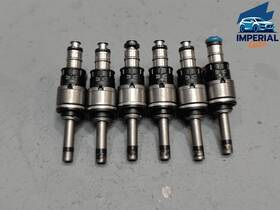
( Manufacturer Part Number: 06G906036F ), ( Type: Fuel Injector Set ), ( Fuel Type: Gasoline ), ( Oe/oem Part Number: 06c-906-036-c, 06c-906-036-g, 06c-906-036-d, 06c-906-036-f, 06c906036f, 06c-906-036-h ), ( Manufacturer Warranty: 1 Month ), ( Performance Part: Yes ), ( Vintage Part: No ), ( Mounting Style: Screw-in )
Review AUDI 3.0l Gas Engine High Pressure Fuel Injector Oem Set Of fits Q7 2017–2019
The **Audi 06G906036F High-Pressure Fuel Injector Set (2017 2019 Q7 3.0L Gas Engine)** represents a critical component for maintaining peak performance, efficiency, and reliability in Audi s sophisticated 3.0-liter turbocharged gasoline direct-injection (GDI) engine, known for its precision engineering and high-output capabilities. Designed exclusively for the **3.0L TFSI (Turbo Fuel Stratified Injection) powertrain**, this set of high-pressure injectors is engineered to deliver an ultra-fine atomization of fuel directly into the combustion chamber, ensuring optimal air-fuel mixture, improved throttle response, and reduced emissions. Each injector in this set is meticulously calibrated to meet Audi s stringent OEM specifications, featuring a **piezoelectric actuator** that provides rapid and precise fuel delivery with minimal lag, even under high-load conditions. The injectors are built with **high-grade stainless steel nozzles** and **ceramic-tipped solenoids** to withstand the extreme pressures (up to **200 bar or higher**) generated by the engine s turbocharging system, preventing clogging, leakage, or premature wear. This set is compatible with the **EA888 3.0L engine variant**, which powers the Q7 s sport-tuned performance, and is essential for restoring or maintaining the engine s factory-intended efficiency, especially after prolonged use, carbon buildup, or injector failure. Whether replacing a single faulty injector or upgrading an entire set for enhanced performance, these **OEM-quality injectors** ensure seamless integration with the engine s fuel management system, including the **high-pressure fuel pump, rail, and ECU**, while adhering to Audi s exacting standards for durability and performance. Proper installation and calibration are recommended to guarantee optimal function, as these injectors play a pivotal role in fuel economy, power output, and the overall health of the turbocharged engine.
### **Pros and Cons of Buying a High-Pressure Fuel Injector Set (Audi 06G906036F) for a 2017-2019 Q7 3.0L Gas Engine**
#### **Pros:**1. **Compatibility and Fitment** The **06G906036F** is an OEM (original equipment manufacturer) part designed specifically for the **2017-2019 Audi Q7 3.0L gas engine (CJDA, CJDB, CJDC)**. This ensures a precise fit, reducing the risk of leaks, improper seating, or performance issues that can occur with aftermarket or mismatched injectors.
2. **Improved Engine Performance** If the original injectors are failing or clogged, replacing them with new OEM injectors can restore proper fuel delivery, leading to:
- Better throttle response
- Smoother acceleration
- Reduced engine misfires or rough idling
- Improved fuel efficiency (if the issue was poor atomization)
3. **Prevents Long-Term Damage** Faulty injectors can cause:- Carbon buildup in the combustion chamber
- Catalytic converter failure (due to unburned fuel)
- Increased emissions (failing an inspection)
- Potential engine damage from rich or lean fuel mixtures
Replacing them early avoids costly repairs down the line.
4. **Warranty Coverage** If purchased from an authorized Audi dealer or a reputable supplier, these injectors may come with a warranty (typically 12-24 months), providing peace of mind against premature failure.
5. **Direct OEM Quality** Audi s high-pressure injectors are built to strict tolerances, ensuring consistent fuel spray patterns and optimal combustion. Aftermarket injectors may vary in quality, leading to inconsistent performance.
6. **Required for Certain Repairs** If the vehicle has a **check engine light (CEL) with codes related to fuel injectors (e.g., P0087, P0088, P0190, P0191, P0192, P0193, P0194)**, replacing them is often a necessary step before further diagnostics (e.g., fuel pressure testing, sensor checks).
7. **Compatibility with Audi s Fuel System** The **3.0L TFSI engine** in the Q7 uses a **high-pressure direct injection (HPDI) system** with **piezoelectric injectors**, which require precise timing and pressure. OEM replacements ensure compatibility with the **common rail system and ECU calibration**.
---
#### **Cons:**1. **High Cost** OEM high-pressure injectors are expensive, typically ranging between **$1,200 $2,500 for a full set of four** (depending on labor and additional components like fuel rail gaskets, O-rings, or a new fuel pump if required). This is significantly more costly than aftermarket alternatives.
2. **Labor-Intensive Installation** Replacing injectors requires:- Removing the fuel rail (often involving disconnecting fuel lines under pressure)
- Replacing O-rings and gaskets
- Recalibrating the ECU (some Audi dealerships require a scan tool reset)
- Potential need for a **fuel system flush** afterward
This job is best left to a **qualified Audi specialist or fuel injection technician**, adding to the total cost.
3. **Potential for Counterfeit Parts** If purchasing from non-authorized sources (e.g., eBay, untrusted online marketplaces), there is a risk of receiving **fake or low-quality injectors** that fail prematurely. Always buy from **Audi-approved suppliers or dealerships**.
4. **Additional Diagnostics May Be Needed** Before purchasing, it s wise to:- Run a **full diagnostic scan** to confirm injector-related codes (e.g., P019x series for fuel injector issues).
- Check **fuel pressure** (low pressure can mimic injector failure).
- Inspect **fuel lines, pump, and filters** sometimes the issue is elsewhere.
If other components (e.g., fuel pump, rail) are worn, they may need replacement simultaneously, increasing costs.
5. **Time Off the Road** The repair requires **multiple hours of labor**, meaning the vehicle will be out of service for at least **a full day**, possibly longer if additional issues arise.
6. **Aftermarket Alternatives Exist** While not always recommended, **high-quality aftermarket injectors** (e.g., **Denso, Siemens, or Bosch OEM-equivalent**) can be **30-50% cheaper** than Audi s. However, they must be **direct replacements** (check part numbers carefully) and come from a trusted brand to avoid performance issues.
7. **Potential for Overkill** If the injectors are **only slightly degraded** (e.g., minor clogging), a **fuel system cleaning (e.g., Liqui Moly Jectron, BG 44K)** or **injector cleaning service** may suffice before full replacement. This can save money if the issue is minor.
---
### **Conclusion:**Replacing the **Audi 06G906036F high-pressure fuel injectors** in a **2017-2019 Q7 3.0L gas engine** is a **necessary repair** if the injectors are failing, causing misfires, or leading to drivability issues. The **pros outweigh the cons** when considering long-term engine health, performance, and emissions compliance. However, the **high cost and labor requirements** make it a significant investment.
**If:**- You have **confirmed injector-related codes** (P019x, P0087/88, etc.).
- The injectors are **visibly dirty or leaking** (upon inspection).
- You ve ruled out **fuel pressure, pump, or rail issues**.
- You want **OEM reliability** and **warranty coverage**.
**Then replacing them is the right choice.**
**If:**- The injectors are **only slightly degraded** and the issue could be resolved with **cleaning or a fuel system flush**.
- You re on a **tight budget** and can consider **high-quality aftermarket injectors** (with caution).
- You re unsure if the injectors are the **root cause** (run diagnostics first).
**Then explore alternative solutions before committing to full replacement.**
---
### **Recommendation:**1. **Verify the Issue** Before purchasing, confirm with a **scan tool** that the injectors are the problem (look for **P0190-P0194, P0087, P0088, or P0197 codes**). If other codes (e.g., fuel pump, pressure sensor) are present, address those first.
2. **Buy from a Trusted Source** Purchase the **06G906036F injectors** from:- An **Audi dealership** (for warranty and authenticity).
- A **reputable online parts supplier** (e.g., **RockAuto, APDEAL, or AudiPartsDirect**) that guarantees OEM quality.
- Avoid **eBay or unknown sellers** unless they provide **certification of authenticity**.
3. **Consider a Full Fuel System Service** If the injectors are **only moderately clogged**, a **professional injector cleaning** or **fuel system flush** (e.g., **Liqui Moly Jectron**) may restore performance at a fraction of the cost.
4. **Budget for Additional Components** Replacement may require:- **New O-rings and gaskets** (often sold as a kit).
- **Fuel rail gasket** (if leaking).
- **Fuel filter replacement** (recommended every 60K miles).
- **ECU recalibration** (some dealerships charge extra for this).
5. **Use a Qualified Technician** Have the work done by an **Audi specialist or a fuel injection expert** to ensure proper installation and avoid future issues.
6. **Check for Warranty Coverage** If the vehicle is still under **factory warranty**, some injector failures may be covered. Contact Audi to verify.
**Final Verdict:**For a **2017-2019 Q7 3.0L with confirmed injector failure**, the **OEM 06G906036F injectors are the best long-term solution**, despite the cost. If the budget is tight, **prioritize diagnostics** to ensure injectors are the sole issue before proceeding. For minor issues, **cleaning may suffice**, but for **severe degradation or leaks, replacement is necessary**.
Details:
Such components must be purchased ONLYNEW and are not included into the kit. Do not think that they can be reused during installation. Products sold in quantities will show a single image representing the others equal or greater condition.
They are of ONE-TIME USE and very often get damaged when the part is removed. In other words, they may be present anther parts but require mandatory replacement with the NEW ones.
part #: 06g906036f prices
- $86.38-$469.99
specifications carfuelinjector:
- for models: Q7
- for makes: Audi
- for years: 2017-2019
- mpn: 06g906036f
- type: Fuel Injector Set
- fuel type: Gasoline
- oe/oem part number: 06c-906-036-c, 06c-906-036-g, 06c-906-036-d, 06c-906-036-f, 06c906036f, 06c-906-036-h
- manufacturer warranty: 1 Month
- performance part: Yes
- vintage part: No
- mounting style: Screw-in
offer carfuelinjector:
- quantity: 1
- best offers: True
- sold: 0
- availability: In Stock
- options: Ship-to-home
- started: April 27, 2026
payments carfuelinjector:
- other
- credit card: Mastercard
- wallet: Google-pay
seller carfuelinjector:
- city: Trenton, New Jersey
- rating: 99.9%
- # reviews: 9581
general carfuelinjector:
- condition: Used
- Air Fuel Delivery > Fuel Injection Parts > Fuel Injectors
shipping carfuelinjector:
- type: Fixed
- carrier: UPS
- transit: 3-8 Days
- class: Economy
- service: UPS Ground Saver
- cost: $0.00
returns carfuelinjector:
- policy: Returns Accepted
- time: 30 Days
- paid by: Buyer
Audi 06G906036F Is Similar To:
- Cleaned amp Flow Tested OEM BOSCH FUEL INJECTOR SET 4 00-06 VW Audi 1.8 (8.6% similar) ...(January 26th, 2014)
- FUEL INJECTOR 022906031J AUDI TT VW TOUAREG 04-06 3.2L (17.3% similar) 2l 6 Cl 2004 -2005 Volkswagen trucks Volkswagen Tuareg flu injector, 2l fits: 2004 -2006 audi audi Ty flu injector, 2004 -2006 audi audi Ty flu injector...(January 14th, 2014)
- 03H906036 Fuel Injector set 6 04-13 For Audi VW 3.6L (37.4% similar) The products include: fuel injector,radiator fan motor,airbag control module,knock sensors,throttle,clock spring,crankshaft sensor,ignition coil,ecu ecm,pressure sensor,power window regulator,air mass sensor,nix sensor,oxygen sensor,airbag crash sensor etc. This is an new original part, oem not ...(May 16th, 2014)
- Audi A4 A6 A8 VW Passat 2.5 TDI injector AFB Bosch 0432133834 059130202 OEM (32.5% similar) Audi a4 a6 a8 VW pasta 5 TD injector AFB bosch 0432133834 059130202 oem...(April 6th, 2014)
- 6 new Audi A4 A6 A8 Q7 VW Touareg Phaeton 2.7 3.0 tdi Bosch injector 057130277AH (31.5% similar) Posted with mobile. So not only will it fit perfectly, it will last. Msrp $695 per injector. Need a injector module. Why buy an aftermarket one that might not fit when you can get a genuine Volkswagen/audi one that will fit perfectly, the first time. Injector module 057-130-277-AH is a genuine ...(May 29th, 2014)
- Audi A4 A6 A8 Q7 VW Genuine Fuel Injection Unit Injector 059130277AH (40.5% similar) This is a used, genuine fuel injector. Part number: 059 130 277 ah 059130277AH replacement part number since 04/2009: 059 130 277 Bud 059130277BD this part is also a replacement of all the following part numbers: 059 130 277 AA 059130277AA 059 130 277 ab 059130277AB 059 130 277 j 059130277J 059 130 ...(April 30th, 2014)
- 4 OEM VW Audi Diesel Fuel Injectors 1981 1982 1983 1984 068130201 NA13X 068130 (33.9% similar) This offer includes all four oem diesel fuel injectors in very good condition with part numbers 068130201, NA13X and 068130. Pop pressures and spray patterns are all within spec. Once removed, these were cleaned and retested. These will fit numerous VW and audi vehicles from the early 80'S such as ...(June 7th, 2014)
- 4 FUEL INJECTORS 06B133551M AUDI A4 VW PASSAT 01-05 1.8T (18.2% similar) Works for some other VW and audi applications. There is nothing wrong with them, just trying to clear out some room. I got bigger fuel injectors for a custom application. Part number 06B133551M...(May 27th, 2014)
- Motor Man Siemens-Deka 078133551BL Fuel Injector Set of 6 Audi 2.7L Turbo (34.6% similar) ...(April 16th, 2014)
- 2001 AUDI S4 A6 2.7T FUEL INJECTORS SET OF 6 078133551M 078 133 551 M (15.3% similar) 2001 audi s4 a6 7t fuel injectors set of 6/0 78133551M engine had 87,000 miles when wrecked...(May 10th, 2014)
- Audi RS4 Fuel Injectors 079-906-036D Set of 4 OEM Fast Free Shipping (34.4% similar) Problem injectors can cause a host of issues such as, MI's-firing, hesitation, hard starts, & stalling. 0t engine, fs boy, 2006 -2008 Etta, pasta, and GTI. The RS4 does have 8 injectors on the engine. This offer is for 4 injectors. Applications as follows: 2007 -2008 audi RS4 fast free shipping ...(April 14th, 2014)